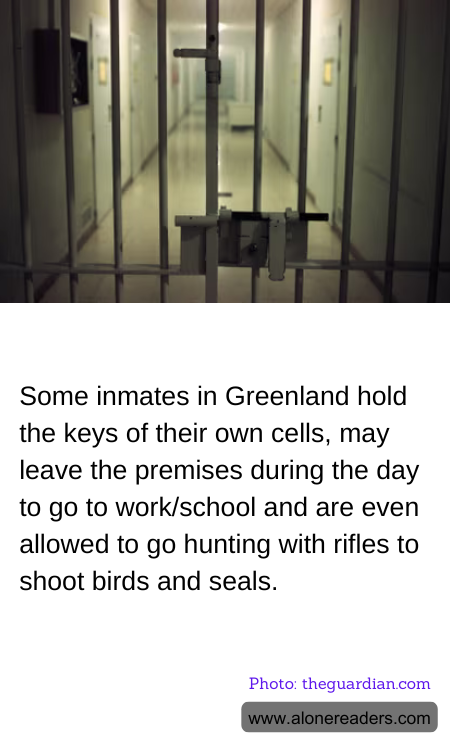
In the vast, icy landscapes of Greenland, a unique approach to incarceration is challenging traditional notions of prison life. Here, some inmates experience a level of freedom that is virtually unheard of in most parts of the world. This progressive system allows certain prisoners to hold the keys to their own cells, leave the premises during the day for work or education, and even partake in hunting activities, including using rifles to shoot birds and seals.
This unconventional model is rooted in the belief that rehabilitation, rather than punishment, should be the primary focus of the penal system. The idea is to integrate inmates into society gradually, preparing them for a life beyond prison walls. By allowing inmates to maintain employment or pursue education, they are given the tools to build a future and reduce the likelihood of reoffending. This approach not only benefits the individual but also contributes positively to the community by fostering a sense of responsibility and self-worth among the inmates.
The practice of allowing inmates to hunt is particularly intriguing and culturally significant. Hunting is an integral part of Greenlandic life, deeply embedded in the traditions and survival strategies of its people. By participating in these activities, inmates maintain a connection to their cultural heritage and learn valuable skills that are essential for life in Greenland's remote and challenging environment. This aspect of the program underscores the importance of cultural context in the rehabilitation process, recognizing that a one-size-fits-all approach to incarceration is often ineffective.
Critics may argue that such freedoms could be risky or that they undermine the punitive aspect of imprisonment. However, the system in Greenland is carefully managed, with privileges granted based on behavior and the nature of the crime committed. This ensures that only those deemed low-risk and committed to rehabilitation are afforded these opportunities. The results have been promising, with lower recidivism rates compared to more traditional prison systems, suggesting that trust and responsibility can be powerful motivators for change.
Greenland's approach to incarceration offers a compelling case study in the potential benefits of a more humane and culturally sensitive penal system. By focusing on rehabilitation and reintegration, rather than solely on punishment, it provides a model that could inspire reforms in other parts of the world. As societies continue to grapple with the challenges of crime and punishment, Greenland's example serves as a reminder that sometimes, the key to change lies in the most unexpected places.
