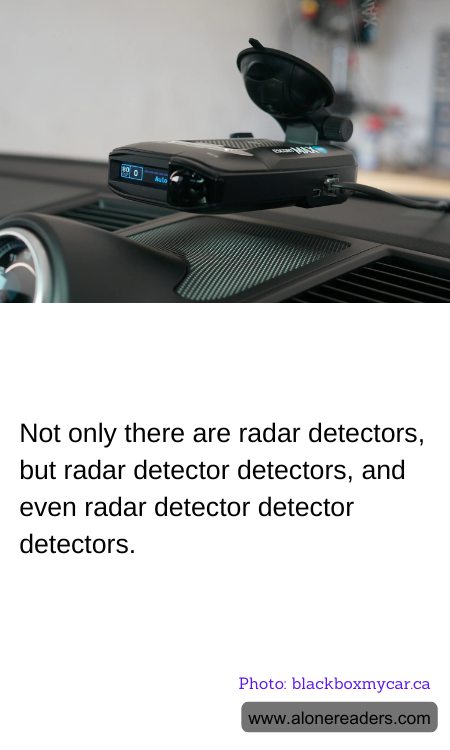
In the world of modern technology, the cat-and-mouse game between drivers and law enforcement has reached new levels of sophistication. What began with the invention of radar detectors has evolved into a complex hierarchy of devices designed to outsmart each other. This fascinating escalation involves not only radar detectors but also radar detector detectors, and even radar detector detector detectors.
Radar detectors were initially developed to alert drivers of police radar guns used to enforce speed limits. These devices work by picking up the radio waves emitted by radar guns, giving drivers a chance to slow down before being clocked for speeding. For many drivers, radar detectors became an essential tool for avoiding tickets and maintaining a clean driving record.
However, law enforcement agencies quickly caught on to this tactic and developed radar detector detectors (RDDs). These devices are designed to identify the presence of radar detectors in vehicles. RDDs work by detecting the small amounts of radio frequency leakage emitted by radar detectors, allowing police to pinpoint drivers who are using them. This innovation was particularly useful in areas where radar detectors are illegal, enabling law enforcement to enforce bans and maintain the integrity of speed enforcement efforts.
The technological arms race didn't stop there. In response to the advent of RDDs, manufacturers of radar detectors began developing radar detector detector detectors (RDDDs). These advanced devices are capable of identifying when an RDD is in use, allowing drivers to turn off or conceal their radar detectors to avoid detection. This level of sophistication highlights the ongoing battle between drivers seeking to evade speed enforcement and authorities striving to uphold traffic laws.
The existence of radar detectors, RDDs, and RDDDs underscores the continuous interplay between innovation and regulation. Each advancement prompts a countermeasure, creating a cycle of technological development that shows no signs of slowing down. This dynamic not only reflects the ingenuity of engineers and developers but also raises questions about the ethics and legality of such devices.
For drivers, the decision to use radar detectors and their subsequent iterations involves weighing the benefits of avoiding speeding tickets against the potential legal consequences. In many jurisdictions, the use of radar detectors is restricted or outright banned, making it crucial for drivers to be aware of local laws before investing in such technology.
As this technological tug-of-war continues, it serves as a reminder of the ever-evolving landscape of driving and law enforcement. While radar detectors and their successors offer a glimpse into the future of automotive technology, they also highlight the ongoing challenge of balancing personal freedom with public safety. Whether this cycle will lead to even more advanced devices remains to be seen, but for now, it stands as a testament to human ingenuity and the relentless pursuit of innovation.
