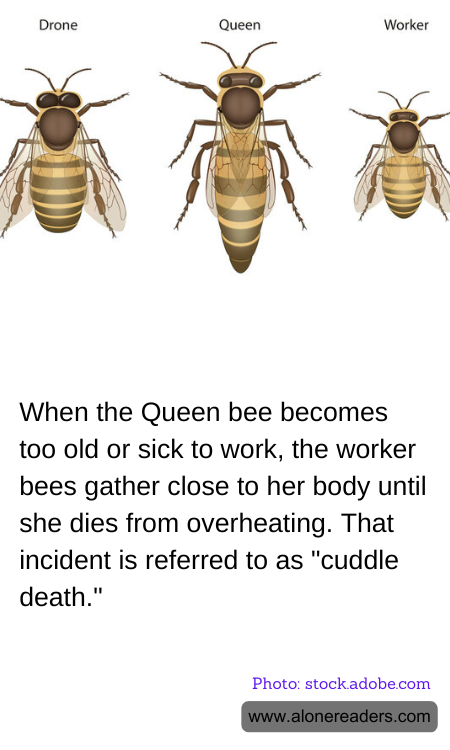
In the intricate world of honeybees, the queen bee holds a position of paramount importance. She is the heart of the hive, responsible for laying eggs and ensuring the colony's survival. However, like all living beings, the queen bee ages and may eventually become too old or sick to fulfill her duties. When this happens, a fascinating and somewhat somber phenomenon occurs, known as "cuddle death."
Cuddle death is a natural process that unfolds when the queen bee is no longer able to lead the hive effectively. Worker bees, who are responsible for maintaining the hive and supporting the queen, instinctively gather around her. This gathering is not one of aggression or malice but rather a collective response to the queen's declining health. The worker bees cluster tightly around the queen, creating a dense mass of bodies that generates heat.
The term "cuddle death" might evoke images of warmth and affection, and in a way, it is a testament to the bees' deep-seated social instincts. However, the outcome is ultimately fatal for the queen. The heat generated by the tightly packed worker bees raises the temperature around the queen to a level that she cannot withstand, leading to her death. This process, while seemingly harsh, is a natural part of the hive's lifecycle and ensures the colony's continued survival.
Once the queen has passed, the worker bees begin the process of selecting a new queen. This involves feeding a few chosen larvae with royal jelly, a nutrient-rich substance that triggers the development of a new queen. The emergence of a new queen ensures that the hive remains productive and cohesive, allowing the cycle of life within the colony to continue.
Cuddle death highlights the complex social structure and behaviors of honeybees. It is a poignant reminder of the delicate balance within nature, where even the most revered members of a community must eventually make way for new life. This process, while seemingly brutal, underscores the resilience and adaptability of honeybee colonies.
For those who study bees or simply appreciate the wonders of nature, cuddle death offers a glimpse into the intricate and often surprising ways in which these tiny creatures manage their societies. It is a testament to the bees' ability to adapt and thrive, ensuring the survival of their species through the ages. As we learn more about these remarkable insects, we gain a deeper appreciation for the complex and interconnected world in which they live.
