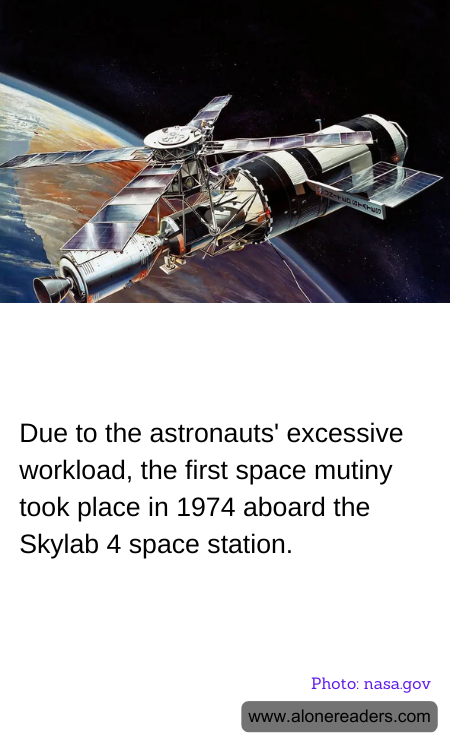
In the annals of space exploration, the story of Skylab 4 stands out not just for its scientific achievements but also for the human drama that unfolded aboard the space station. In 1974, a unique event occurred that would later be dubbed the first space mutiny. This incident was a direct result of the excessive workload placed on the astronauts, highlighting the challenges of human endurance and the need for balance in space missions.
Skylab 4 was the third and final manned mission to the Skylab space station, launched by NASA in November 1973. The crew, consisting of Commander Gerald Carr, Science Pilot Edward Gibson, and Pilot William Pogue, was tasked with an ambitious schedule. Their mission was to conduct a variety of scientific experiments, observe the Earth, and study the Sun. However, the workload quickly became overwhelming. The astronauts found themselves working long hours with little time for rest or personal activities, leading to mounting stress and fatigue.
The situation reached a breaking point on December 28, 1973, when the crew decided to take a stand. They effectively staged a mutiny by turning off their radio communications with mission control for an entire day. This unprecedented move was not an act of rebellion but rather a desperate plea for understanding and change. The astronauts used this time to relax, enjoy the view of Earth from space, and discuss their concerns among themselves without the constant pressure of mission control's demands.
This day of silence forced NASA to reconsider its approach to managing the workload of astronauts. Upon re-establishing communication, the crew and mission control engaged in a candid discussion about the importance of balancing work and rest. As a result, the astronauts were granted more autonomy in managing their schedules, allowing them to prioritize tasks and allocate time for relaxation. This adjustment not only improved the crew's morale but also enhanced their productivity for the remainder of the mission.
The Skylab 4 incident serves as a valuable lesson in the history of space exploration. It underscores the importance of recognizing the human element in space missions, where the physical and mental well-being of astronauts is as crucial as the scientific objectives they aim to achieve. The mutiny highlighted the need for flexibility and understanding in mission planning, ensuring that astronauts can perform at their best without compromising their health.
In the years since Skylab 4, space agencies have taken these lessons to heart, implementing more balanced schedules and providing better support for astronauts on long-duration missions. The story of the first space mutiny remains a testament to the resilience and ingenuity of astronauts, reminding us that even in the vastness of space, the human spirit prevails.
