More About This Card
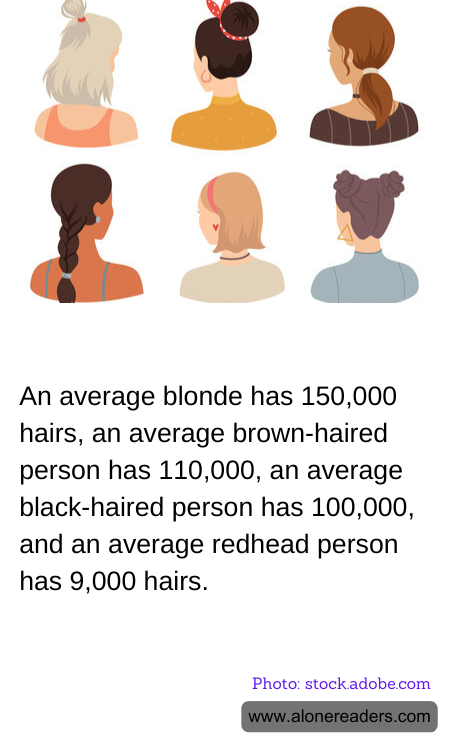
Hair has always been a fascinating aspect of human biology, not just for its aesthetic appeal but also for its intriguing variety. One of the most interesting facts about hair is the variation in the number of hair strands based on hair color. On average, blondes have about 150,000 hairs, brown-haired individuals have around 110,000, those with black hair have approximately 100,000, and redheads have the least, with about 90,000 hairs. These differences are not just trivial statistics; they reflect the complex interplay of genetics and evolution.
The reason behind these variations lies in the genetic makeup that determines hair color and density. Hair color is primarily determined by the type and amount of melanin present in the hair shaft. Blondes, who have less melanin, tend to have finer hair, which allows for a greater number of hair follicles on the scalp. This is why they typically have the highest hair count. In contrast, redheads, who have a unique type of melanin called pheomelanin, tend to have thicker hair strands, resulting in fewer follicles and thus a lower overall hair count.
Brown and black-haired individuals fall somewhere in between. Brown hair, which contains a moderate amount of eumelanin, is denser than blonde hair but less so than black hair. Black hair, with the highest concentration of eumelanin, is often the thickest, which explains the slightly lower number of hair strands compared to blondes and brunettes. These variations are a testament to how human traits have adapted over time, influenced by factors such as climate, geography, and even evolutionary advantages.
Understanding these differences can also shed light on hair care practices. For instance, individuals with more hair strands, like blondes, may find their hair more prone to tangling and breakage, requiring gentle handling and conditioning. On the other hand, redheads, with their thicker strands, might focus more on maintaining moisture to prevent dryness. Recognizing these unique needs can help individuals tailor their hair care routines to better suit their specific hair type.
Beyond the numbers, hair serves as a cultural and personal identifier, often playing a significant role in self-expression and identity. From ancient times to modern-day fashion, hair has been styled, colored, and adorned in countless ways, reflecting personal tastes and societal trends. The diversity in hair color and density adds to this rich tapestry, offering a wide array of possibilities for individual expression.
In conclusion, the number of hair strands on a person's head is more than just a quirky fact; it is a reflection of the intricate genetic and evolutionary history that shapes human diversity. Whether you are a blonde with a full head of fine hair or a redhead with fewer but thicker strands, each hair type brings its own beauty and challenges. Embracing these differences can lead to a deeper appreciation of the unique characteristics that make each person distinct.