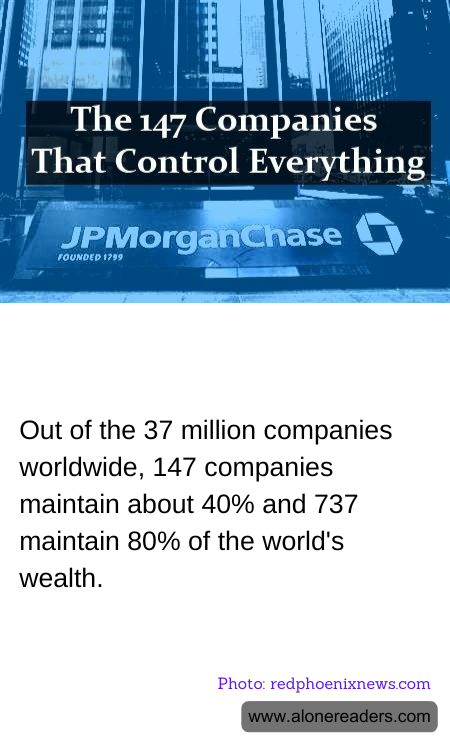
In the vast landscape of global commerce, a striking concentration of wealth and influence is held by a surprisingly small number of companies. Out of approximately 37 million companies worldwide, a mere 147 wield control over about 40% of the world's wealth. Expanding this circle slightly, 737 companies collectively maintain a staggering 80% of global wealth. This concentration of economic power raises important questions about the dynamics of global capitalism and its implications for economies and societies around the world.
The phenomenon of wealth concentration among a select few corporations is not a new development, but its scale and impact have become more pronounced in recent years. These companies, often multinational conglomerates, span various industries including technology, finance, energy, and consumer goods. Their influence extends beyond mere financial metrics; they shape global markets, drive innovation, and often set the standards for corporate governance and ethical practices.
One of the primary reasons for this concentration is the interconnected nature of modern economies. Large corporations benefit from economies of scale, allowing them to operate more efficiently and at lower costs than smaller competitors. This advantage is further amplified by their ability to invest heavily in research and development, marketing, and global supply chains, creating barriers to entry that are difficult for smaller companies to overcome.
Moreover, these corporations often engage in strategic mergers and acquisitions, further consolidating their power and market share. This trend not only reduces competition but also increases their influence over regulatory frameworks and political landscapes. As a result, these companies can shape policies that favor their interests, sometimes at the expense of smaller businesses and consumers.
While the concentration of wealth among a few companies can lead to increased efficiency and innovation, it also poses significant challenges. The disparity in wealth distribution can exacerbate economic inequality, as the benefits of growth are not evenly shared across society. This can lead to social unrest and a growing divide between the wealthy and the rest of the population.
Furthermore, the dominance of a few companies can stifle competition and limit consumer choice. In markets where a handful of corporations control the majority of resources, smaller companies struggle to compete, leading to less innovation and higher prices for consumers. This lack of competition can also result in complacency among the dominant players, reducing the incentive to improve products and services.
Addressing the challenges posed by this concentration of wealth requires a multifaceted approach. Policymakers must strike a balance between encouraging economic growth and ensuring fair competition. This may involve implementing regulations that prevent monopolistic practices and promote transparency and accountability. Additionally, fostering an environment that supports entrepreneurship and innovation can help level the playing field for smaller companies.
In conclusion, while the concentration of wealth among a small number of companies is a testament to their success and efficiency, it also highlights the need for careful management of global economic systems. By promoting fair competition and equitable distribution of resources, societies can harness the benefits of these powerful corporations while mitigating the risks associated with their dominance.
