More About This Card
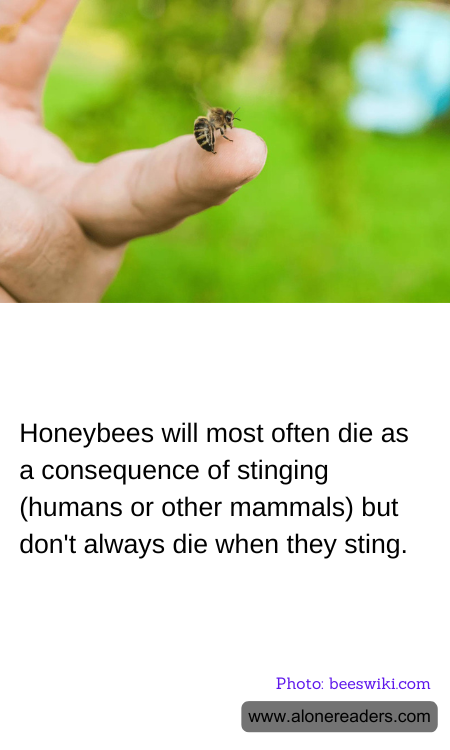
Honeybees are fascinating creatures that play a crucial role in pollinating plants, contributing significantly to the ecosystem and agriculture. However, one of the most intriguing aspects of honeybee behavior is their defensive mechanism: the sting. It is a common belief that honeybees die after stinging humans or other mammals, but this is not always the case.
When a honeybee stings a mammal, it often results in the bee's death. This is because the stinger of a honeybee is barbed, designed to lodge into the thick skin of mammals. When the bee tries to fly away after stinging, the barbed stinger remains embedded in the skin, and the bee's abdomen is torn apart, leading to its death. This sacrificial act is a defense mechanism to protect the hive from perceived threats. The stinger continues to pump venom into the target even after the bee has flown away, which can deter predators and give the hive a better chance of survival.
However, honeybees do not always die after stinging. When they sting other insects or creatures with thinner skin, the barbed stinger does not get stuck. In these cases, the bee can safely withdraw its stinger without any harm to itself. This ability to sting without dying is crucial for defending the hive against insect predators, such as wasps or other bees, where multiple stings might be necessary to fend off an attack.
The evolutionary trade-off of the honeybee's barbed stinger is a fascinating aspect of nature. While it may seem counterintuitive for a bee to sacrifice itself, this mechanism ensures that the hive is protected. The survival of the hive is paramount, as it houses the queen and the future generations of bees. The loss of a single worker bee is a small price to pay for the safety of the colony.
Understanding the behavior of honeybees and their stinging mechanism can foster a greater appreciation for these vital pollinators. It also highlights the importance of respecting their space and minimizing disturbances to their hives. By doing so, we can coexist peacefully with honeybees, ensuring they continue to thrive and support the ecosystems that depend on them.
In conclusion, while honeybees often die after stinging mammals due to their barbed stingers, they do not always meet the same fate when stinging other insects. This dual capability underscores the complexity of their defensive strategies and the importance of their role in nature. By learning more about honeybees and their behaviors, we can better appreciate their contributions to our world and work towards their conservation.