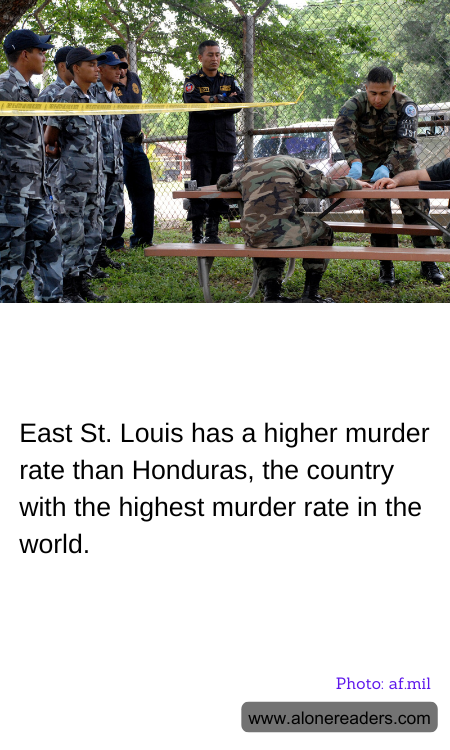
East St. Louis, a city located in Illinois, has garnered attention for its alarmingly high murder rate, surpassing even that of Honduras, a country often cited for having the highest murder rate in the world. This stark reality paints a troubling picture of the challenges faced by this American city, raising questions about the underlying causes and potential solutions to this crisis.
The city of East St. Louis, with a population of just over 26,000, has been grappling with issues of crime and violence for decades. The murder rate here is a reflection of deeper socio-economic problems, including poverty, unemployment, and a lack of educational and recreational opportunities for its residents. These factors create an environment where crime can thrive, and the impact on the community is profound. Families live in fear, and the loss of life is a constant reminder of the city's struggles.
Comparatively, Honduras, a Central American nation, has long been plagued by violence, often attributed to drug trafficking, gang activity, and political instability. Despite its reputation, the murder rate in East St. Louis is higher, highlighting the severity of the situation in this small American city. The comparison underscores the fact that violence is not confined to developing nations but can also be a significant issue in developed countries, where systemic problems remain unaddressed.
Efforts to combat the high murder rate in East St. Louis require a multifaceted approach. Community leaders and local government officials are working to implement strategies that address the root causes of violence. Initiatives aimed at improving education, creating job opportunities, and fostering community engagement are crucial in breaking the cycle of crime. Additionally, strengthening law enforcement and building trust between the police and the community are essential steps in creating a safer environment.
The situation in East St. Louis serves as a sobering reminder of the complexities of urban violence and the need for comprehensive solutions. It challenges the perception that high murder rates are solely a problem of less developed nations and calls for a concerted effort to address the socio-economic disparities that contribute to such violence. By focusing on prevention, intervention, and community empowerment, there is hope for reducing the murder rate and improving the quality of life for the residents of East St. Louis.
Ultimately, the story of East St. Louis is one of resilience and the potential for change. While the statistics are daunting, the commitment of the community to overcome these challenges offers a glimpse of hope. By addressing the underlying issues and fostering a sense of unity and purpose, East St. Louis can work towards a future where safety and prosperity are within reach for all its residents.
