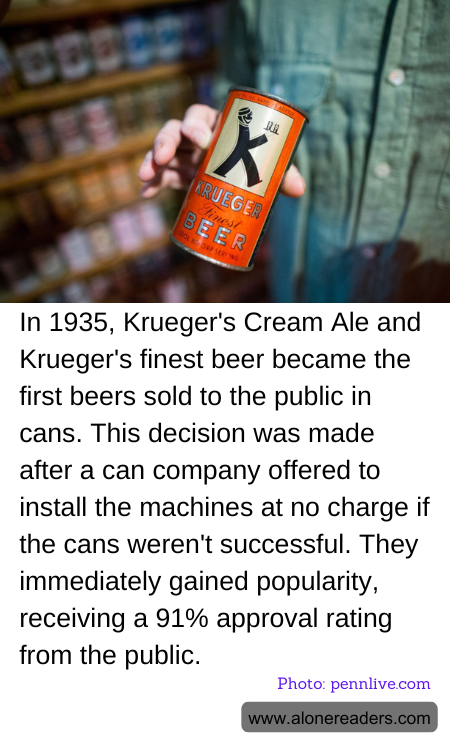
More About This Card
In the annals of brewing history, 1935 stands out as a pivotal year, marking a revolutionary shift in how beer was packaged and consumed. This was the year Krueger's Cream Ale and Krueger's Finest Beer became the first beers sold to the public in cans, a decision that would forever change the landscape of the beer industry. The innovation was driven by a collaboration between Krueger Brewing Company and the American Can Company, which proposed an intriguing offer: they would install the necessary canning machinery at no cost if the venture proved unsuccessful. This bold move was a testament to the brewing company's willingness to embrace innovation and the can company's confidence in their product.
The introduction of canned beer was not merely a novelty; it was a response to practical challenges faced by both brewers and consumers. Bottled beer, while popular, was heavy, fragile, and expensive to transport. Cans, on the other hand, were lightweight, unbreakable, and more cost-effective to produce and ship. They also offered a longer shelf life by protecting the beer from light and air, which could spoil the flavor. These advantages quickly became apparent to consumers, who were eager to embrace the convenience and quality of canned beer.
The public's response to Krueger's canned beer was overwhelmingly positive. A survey conducted shortly after the launch revealed a staggering 91% approval rating from consumers. This enthusiastic reception was not only a testament to the quality of Krueger's beer but also an indication of the public's readiness for change. The success of Krueger's canned beer paved the way for other breweries to follow suit, and by the end of the decade, canned beer had become a staple in the American beer market.
The impact of Krueger's decision to can their beer extends beyond the realm of brewing. It set a precedent for innovation and adaptability in the face of changing consumer preferences and technological advancements. The success of canned beer demonstrated the importance of understanding and responding to consumer needs, a lesson that remains relevant to businesses across industries today.
In retrospect, the introduction of canned beer in 1935 was more than just a clever marketing strategy; it was a transformative moment in the history of beer. It highlighted the power of collaboration between industries and the potential for innovation to drive consumer satisfaction and business success. As we raise a can of beer today, we can appreciate the foresight and courage of those who dared to think outside the bottle, forever altering the way we enjoy one of the world's oldest beverages.