More About This Card
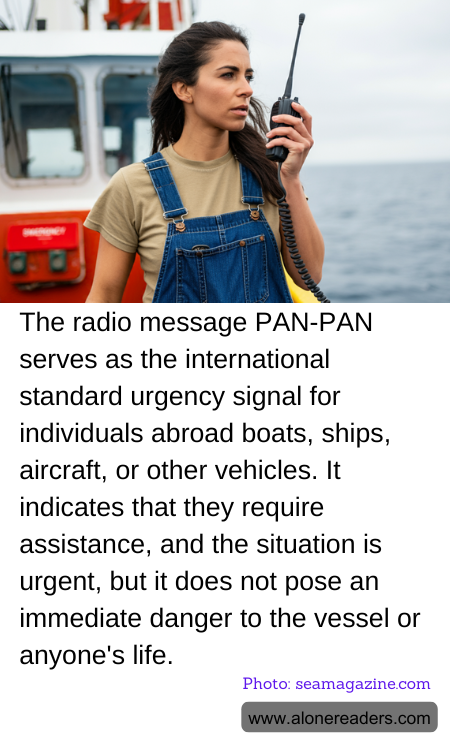
In the vast expanse of the world's oceans and skies, communication is key to ensuring safety and coordination. Among the various signals used by mariners and aviators, the radio message "PAN-PAN" stands out as a crucial tool for conveying urgency without the immediate threat of disaster. This international standard urgency signal is a vital part of the communication protocols for individuals aboard boats, ships, aircraft, or other vehicles, indicating that they require assistance in a situation that is pressing but not life-threatening.
The term "PAN-PAN" is derived from the French word "panne," meaning a breakdown or failure. When broadcasted, it signifies that the vessel or aircraft is experiencing a problem that necessitates help, but the situation has not escalated to the level of a "Mayday" call, which indicates imminent danger to life or the vessel. The use of "PAN-PAN" allows for a clear distinction between varying levels of emergencies, ensuring that resources are allocated appropriately and that responders can prioritize their actions effectively.
When a "PAN-PAN" message is transmitted, it typically includes the name and position of the vessel or aircraft, the nature of the problem, and any other relevant information that could assist in the response. This structured communication helps rescue services and nearby vessels or aircraft to understand the situation and provide the necessary assistance. For example, a boat experiencing engine failure in calm waters might issue a "PAN-PAN" call to alert nearby vessels of its predicament, allowing for a timely tow or repair without the urgency of a life-threatening situation.
The importance of the "PAN-PAN" signal lies in its ability to prevent situations from escalating into more severe emergencies. By alerting others to a developing problem early on, it provides an opportunity for intervention before conditions worsen. This proactive approach can be crucial in environments where weather conditions can change rapidly or where mechanical issues could lead to more significant hazards if left unaddressed.
Moreover, the use of "PAN-PAN" reflects the broader ethos of safety and preparedness that governs maritime and aviation operations. It underscores the importance of vigilance and communication in maintaining safety and ensuring that help is available when needed. For those aboard vessels or aircraft, knowing when and how to use the "PAN-PAN" signal is an essential part of their training, equipping them with the knowledge to handle unexpected situations with confidence and clarity.
In conclusion, the "PAN-PAN" radio message serves as a vital component of international safety protocols, bridging the gap between routine operations and emergency situations. By providing a means to communicate urgency without the immediacy of a life-threatening emergency, it plays a crucial role in safeguarding lives and property on the seas and in the skies. As such, it remains an indispensable tool for mariners and aviators worldwide, ensuring that help is never far away when it is needed most.