More About This Card
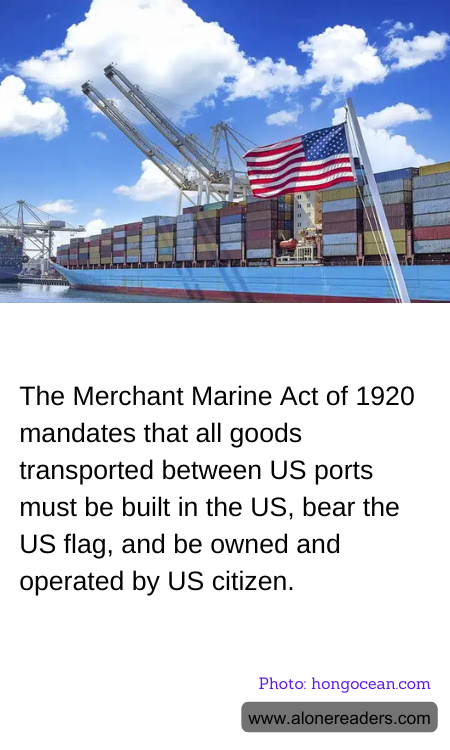
The Merchant Marine Act of 1920, commonly known as the Jones Act, is a pivotal piece of legislation that has shaped the landscape of maritime commerce in the United States for over a century. This act mandates that all goods transported between U.S. ports must be carried on ships that are built in the United States, fly the U.S. flag, and are owned and operated by U.S. citizens. This requirement has had far-reaching implications for the American shipping industry, national security, and the economy.
The primary intent behind the Jones Act was to bolster the U.S. maritime industry, ensuring that the nation maintained a robust fleet of merchant ships that could be called upon in times of national emergency or war. By mandating that ships used for domestic trade be constructed in American shipyards, the act aimed to preserve and create jobs within the shipbuilding sector. Additionally, by requiring these vessels to be owned and operated by U.S. citizens, the act sought to ensure that the control and operation of these ships remained in American hands, thus safeguarding national security interests.
However, the Jones Act has been a subject of debate and controversy over the years. Critics argue that the act has led to increased shipping costs, as U.S.-built ships are often more expensive than their foreign counterparts. This, in turn, can lead to higher prices for goods transported between U.S. ports, affecting consumers and businesses alike. Furthermore, some contend that the act stifles competition and innovation within the maritime industry, as it limits the pool of available ships and operators to those that meet its stringent requirements.
On the other hand, supporters of the Jones Act emphasize its importance in maintaining a strong maritime industry that is crucial for national defense. They argue that the act ensures the availability of a fleet that can be mobilized quickly in times of crisis, providing essential support to military operations. Additionally, proponents highlight the economic benefits of sustaining American shipyards and the jobs they provide, which are vital to the communities they serve.
In recent years, there have been calls to reform or repeal the Jones Act, particularly in the wake of natural disasters where its restrictions have been perceived as hindering relief efforts. Nonetheless, the act remains a cornerstone of U.S. maritime policy, reflecting a balance between economic interests and national security considerations.
As the global shipping industry continues to evolve, the debate over the Jones Act is likely to persist. While its future remains uncertain, the act's impact on the U.S. maritime industry and its role in shaping the nation's economic and security landscape is undeniable. Whether through reform or steadfast adherence, the principles enshrined in the Merchant Marine Act of 1920 will continue to influence American maritime policy for years to come.