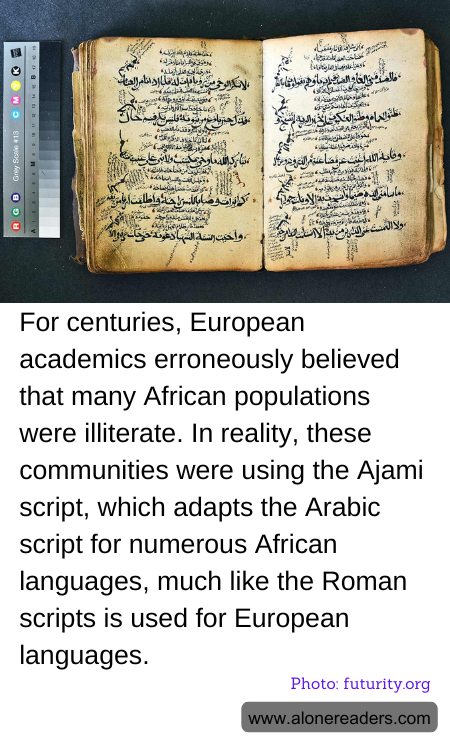
For centuries, a pervasive misconception persisted among European academics that many African populations were illiterate. This erroneous belief overlooked the rich tapestry of literacy and written communication that thrived across the African continent. A significant aspect of this overlooked literacy is the use of the Ajami script, a writing system that adapts the Arabic script to accommodate numerous African languages. Much like the Roman script serves European languages, Ajami has been a vital tool for communication, education, and cultural preservation in Africa.
Ajami, derived from the Arabic word for "foreign" or "non-Arabic," is a testament to the adaptability and ingenuity of African societies. It has been used for centuries in various regions, particularly in West Africa, to write languages such as Hausa, Fulfulde, Wolof, and Swahili, among others. This script allowed for the transcription of local languages, enabling communities to document their histories, religious texts, poetry, and everyday transactions. The use of Ajami facilitated the spread of Islam and education, as it allowed African scholars to engage with Arabic texts and produce their own scholarly works.
The misconception of African illiteracy can be attributed to a Eurocentric perspective that often equated literacy with the use of the Roman alphabet. This narrow view failed to recognize the diverse and sophisticated systems of writing that existed outside of Europe. Ajami, with its deep roots in African history, challenges this narrative by highlighting the continent's rich intellectual traditions. It underscores the fact that literacy is not confined to a single script or language but is a multifaceted phenomenon that varies across cultures and regions.
In recent years, there has been a growing recognition of the importance of Ajami in understanding African history and culture. Scholars and linguists are increasingly exploring Ajami manuscripts, which offer invaluable insights into the social, political, and religious life of African communities. These texts reveal a vibrant intellectual landscape that has long been overlooked by mainstream historical narratives. By studying Ajami, researchers are uncovering the voices and perspectives of African scholars who contributed to global knowledge and culture.
The story of Ajami is a reminder of the need to broaden our understanding of literacy and acknowledge the diverse ways in which human societies have communicated and preserved knowledge. It challenges us to move beyond Eurocentric frameworks and appreciate the rich cultural heritage of Africa. As we continue to explore the depths of Ajami and other indigenous scripts, we gain a more nuanced and inclusive view of history, one that celebrates the ingenuity and resilience of African communities.
