More About This Card
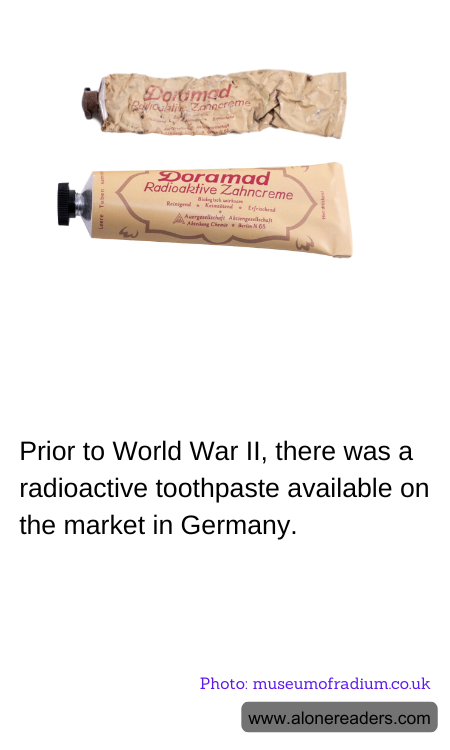
In the years leading up to World War II, the world was captivated by the promise of radioactivity. This fascination extended into various consumer products, including a rather peculiar item: radioactive toothpaste. In Germany, this product was marketed under the brand name Doramad, produced by the Auergesellschaft company. It was one of the many items that capitalized on the public's limited understanding of radioactivity and its potential health benefits.
Doramad toothpaste contained small amounts of thorium, a naturally occurring radioactive element. At the time, thorium was believed to have health-enhancing properties, and the toothpaste was advertised as a way to strengthen teeth and gums, whiten teeth, and improve overall oral hygiene. The marketing campaigns were persuasive, often highlighting the "scientific" benefits of radioactivity, which was then seen as a modern marvel.
The use of radioactive materials in consumer products was not limited to toothpaste. During the early 20th century, radioactivity was a buzzword that symbolized progress and innovation. Products ranging from wristwatches with glowing dials to health tonics and even cosmetics were infused with radioactive substances. The public's enthusiasm for these products was fueled by a combination of scientific curiosity and the allure of cutting-edge technology.
However, the enthusiasm for radioactive products was short-lived. As scientific understanding of radioactivity advanced, the potential health risks became more apparent. By the late 1930s and early 1940s, the dangers of prolonged exposure to radioactive materials were becoming increasingly recognized. This led to a gradual decline in the popularity of such products, and many were eventually removed from the market.
The story of radioactive toothpaste serves as a cautionary tale about the intersection of science and consumerism. It highlights the importance of rigorous scientific research and regulation in ensuring public safety. The initial excitement surrounding radioactivity was based on incomplete knowledge, and it took time for the scientific community to fully understand the implications of exposure to radioactive substances.
Today, the idea of radioactive toothpaste seems almost absurd, a relic of a bygone era when the potential dangers of radioactivity were not yet fully understood. It serves as a reminder of how far scientific understanding has come and the importance of skepticism and critical thinking when it comes to health and wellness products. As we continue to innovate and explore new technologies, the lessons from the past remain relevant, urging us to balance curiosity with caution.