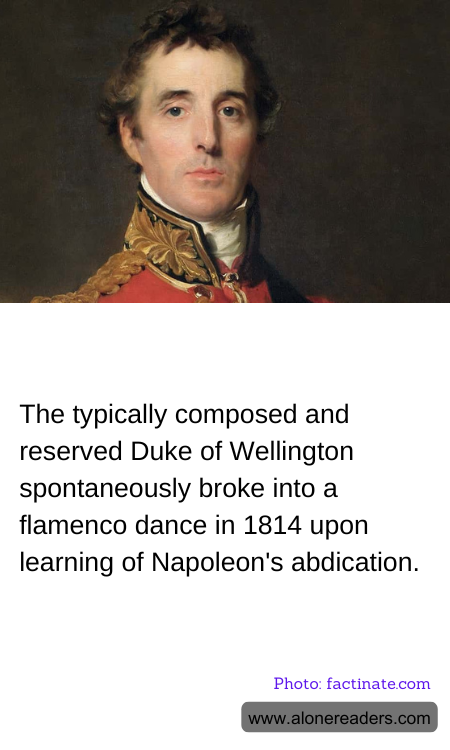
More About This Card
In the annals of history, the Duke of Wellington is often remembered as a stoic and disciplined military leader, renowned for his strategic acumen and unyielding composure. However, an intriguing anecdote from 1814 paints a different picture of the typically reserved Duke. It is said that upon receiving the news of Napoleon Bonaparte's abdication, the Duke of Wellington, in an uncharacteristic display of exuberance, spontaneously broke into a flamenco dance.
This unexpected burst of joy occurred at a pivotal moment in European history. The Napoleonic Wars had ravaged the continent for over a decade, with Napoleon's ambitions leaving a trail of destruction and upheaval. The Duke of Wellington, who had been a central figure in the coalition efforts against Napoleon, had dedicated years to the cause of restoring peace and stability. The abdication of Napoleon marked a significant turning point, signaling the end of a long and arduous conflict.
The image of the Duke, typically clad in his military regalia, suddenly engaging in the lively and passionate movements of flamenco, offers a glimpse into the profound relief and elation that must have swept over him. Flamenco, with its vibrant rhythms and expressive gestures, is a dance that embodies emotion and celebration. For the Duke, this spontaneous act was likely a cathartic release, a momentary shedding of the burdens of leadership and the weight of war.
While the historical accuracy of this anecdote may be debated, its essence captures the human side of a figure often enshrined in the stoic veneer of military history. It serves as a reminder that even the most composed individuals can experience moments of unrestrained joy. The Duke's impromptu dance can be seen as a universal expression of triumph and relief, transcending the boundaries of time and culture.
This story also highlights the power of dance as a form of expression. Flamenco, with its roots in the cultural melting pot of Andalusia, Spain, is a dance that speaks to the soul. It is a fitting metaphor for the collective sigh of relief felt across Europe at the end of Napoleon's reign. The Duke's dance, whether fact or folklore, symbolizes the shared joy of nations and the hope for a peaceful future.
In the end, this tale of the Duke of Wellington's flamenco dance serves as a charming footnote in the grand narrative of history. It reminds us that even the most formidable leaders are, at their core, human beings capable of spontaneous joy. As we reflect on this moment, we are invited to consider the ways in which we, too, might find moments of celebration and expression in our own lives, regardless of the challenges we face.