More About This Card
In the annals of football history, few incidents have captured the imagination and controversy of fans worldwide quite like the infamous 1990 World Cup qualifying match between Brazil and Chile. This match, held on September 3, 1989, at the Maracanã Stadium in Rio de Janeiro, became notorious not for the skills displayed on the pitch, but for the scandalous actions of Chilean goalkeeper Roberto Rojas.
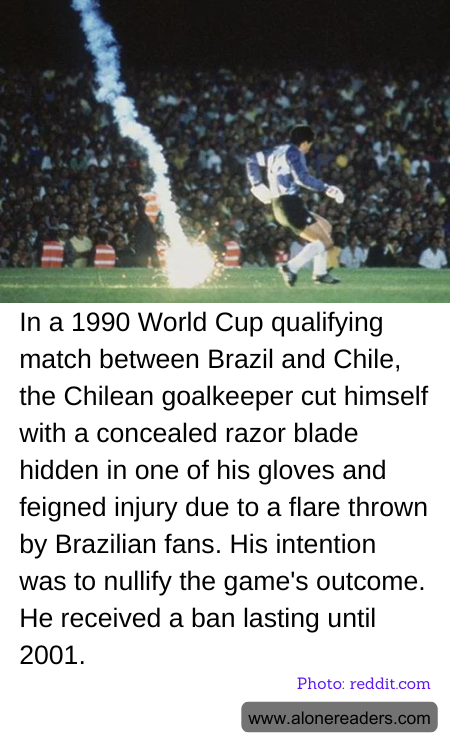
As the match progressed, Brazil was leading 1-0, a scoreline that would see them through to the World Cup finals in Italy. However, the game took a dramatic turn when a flare was thrown onto the field from the stands, landing near Rojas. In a shocking twist, Rojas fell to the ground, clutching his head, seemingly injured by the flare. The sight of blood on his face added to the chaos, leading to the match being abandoned amid confusion and concern for the goalkeeper's wellbeing.
The truth, however, was far more sinister. It was later revealed that Rojas had concealed a razor blade in one of his gloves, which he used to cut himself, creating the illusion of an injury caused by the flare. This act was part of a calculated plan to have the match nullified, as Chile faced elimination from World Cup contention. The intention was to exploit the incident to claim that the match conditions were unsafe, thereby forcing a replay or a favorable ruling from FIFA.
The fallout from this deception was swift and severe. FIFA conducted a thorough investigation, uncovering the truth behind Rojas's actions. The governing body of world football responded by banning Roberto Rojas from the sport until 2001, effectively ending his career at the international level. Additionally, the Chilean national team was disqualified from the 1994 World Cup qualifiers, serving as a stark reminder of the consequences of unsportsmanlike conduct.
This incident remains a poignant example of the lengths to which individuals might go in the high-stakes world of international football. It underscores the importance of integrity and fair play, values that are essential to the spirit of the game. While the actions of one player cast a shadow over the sport, the response from FIFA highlighted the commitment to maintaining the integrity of football on the global stage.
The legacy of the 1990 World Cup qualifying match between Brazil and Chile serves as a cautionary tale, reminding players, officials, and fans alike of the importance of honesty and sportsmanship. It is a story that continues to resonate, illustrating the enduring impact of one of football's most notorious scandals.