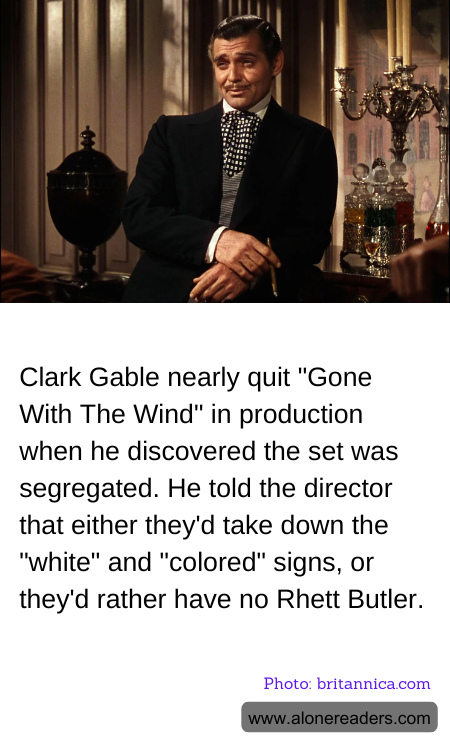
Clark Gable, the iconic actor known for his role as Rhett Butler in the classic film "Gone With The Wind," nearly walked away from the production due to a principled stand against racial segregation. During the filming of the 1939 epic, Gable discovered that the set was segregated, with "white" and "colored" signs designating separate facilities for black and white cast and crew members. This discovery deeply troubled Gable, who was known for his progressive views on race and equality.
The film, set against the backdrop of the American Civil War and Reconstruction era, was a massive undertaking that required a large and diverse cast. Despite the film's historical context, Gable was unwilling to accept the racial discrimination that was prevalent in Hollywood at the time. Upon learning of the segregation on set, he approached the film's director, Victor Fleming, with an ultimatum: either the signs would be removed, or he would no longer participate in the film.
Gable's stance was a bold move, especially considering the era's social norms and the potential risk to his career. However, his insistence on equality and fairness prevailed. The signs were taken down, allowing the cast and crew to work in a more inclusive environment. Gable's actions not only demonstrated his commitment to justice but also set a precedent for challenging racial discrimination in the film industry.
This incident is a testament to Gable's character and his willingness to use his influence to advocate for change. It also highlights the complexities and contradictions of Hollywood during that period, where groundbreaking films were made amidst a backdrop of racial inequality. Gable's decision to stand up against segregation was a significant moment in the history of cinema, reflecting a broader struggle for civil rights that would continue to unfold over the coming decades.
Clark Gable's legacy as an actor is well-established, but his actions on the set of "Gone With The Wind" reveal a deeper legacy of courage and integrity. By refusing to accept the status quo, he not only ensured that the film could be completed with his participation but also contributed to a gradual shift in attitudes within the industry. His story serves as an inspiring reminder of the power of individual action in the face of injustice, and the impact one person can have in promoting equality and respect for all.
