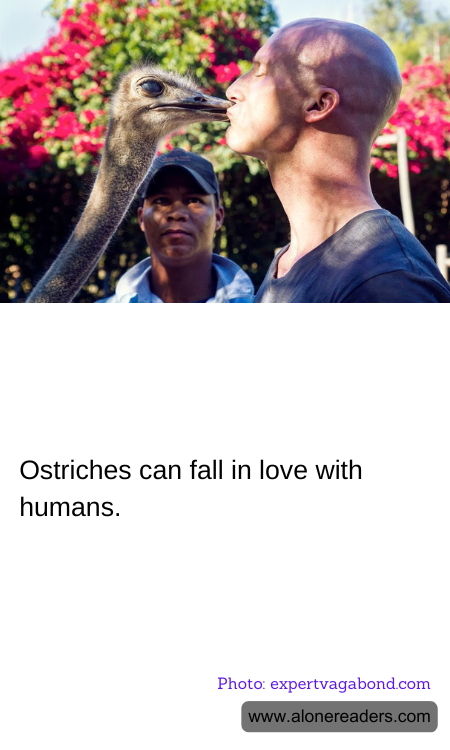
In the fascinating world of animal behavior, the idea that ostriches can fall in love with humans might sound like a whimsical notion, but it is rooted in genuine observations. Ostriches, the world's largest birds, are known for their impressive size, speed, and unique behaviors. Among these behaviors is their capacity to form bonds with humans, which some researchers and animal handlers have described as akin to falling in love.
Ostriches are highly social creatures, and in the wild, they live in groups that provide them with companionship and protection. When these birds are raised in captivity, especially from a young age, they often imprint on their human caretakers. Imprinting is a critical period shortly after hatching when young birds form attachments to the first moving object they see, which is usually their mother. However, in the absence of their natural parents, ostriches can imprint on humans, leading to a strong bond that can resemble affection or love.
This bond is not just a one-way street. Humans who work closely with ostriches often report a deep connection with these birds. Ostriches may follow their human caretakers around, display excitement upon seeing them, and even engage in courtship behaviors typically reserved for their own species. These behaviors can include elaborate dances, feather displays, and vocalizations, all aimed at garnering attention and affection.
While the idea of an ostrich falling in love with a human might seem endearing, it is important to approach these relationships with care and understanding. Ostriches are powerful animals, and their courtship behaviors, while affectionate, can sometimes be overwhelming or even dangerous due to their size and strength. Therefore, handlers must maintain a balance between nurturing the bond and ensuring safety for both the bird and themselves.
The phenomenon of ostriches forming attachments to humans highlights the complexity of animal emotions and the capacity for cross-species relationships. It serves as a reminder of the deep connections that can form between humans and animals, transcending the boundaries of species. These relationships can enrich our understanding of animal behavior and provide unique insights into the emotional lives of creatures that share our world.
In conclusion, while the notion of ostriches falling in love with humans might initially seem like a flight of fancy, it is a testament to the profound and sometimes surprising ways in which animals can connect with us. These bonds, built on trust and familiarity, underscore the importance of empathy and respect in our interactions with the animal kingdom. As we continue to explore these relationships, we gain a greater appreciation for the diverse and intricate tapestry of life on Earth.
