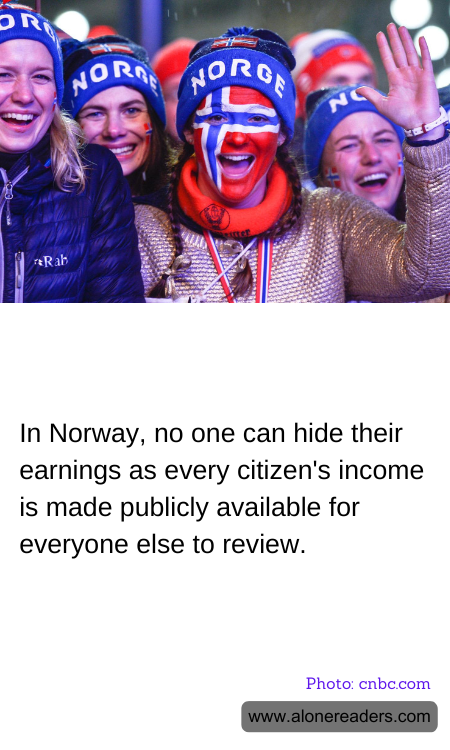
In Norway, transparency is not just a principle but a practice deeply embedded in the fabric of society. One of the most striking examples of this commitment to openness is the public accessibility of every citizen's income. This unique approach allows anyone to review the earnings of others, fostering a culture of trust and equality. While this might seem intrusive to those unfamiliar with the system, it is a long-standing tradition in Norway, reflecting the country's values of transparency and fairness.
The practice, known as "skattelister," dates back to the early 19th century and has evolved with the times. Initially, tax records were published in newspapers, but today, they are accessible online through the Norwegian Tax Administration's website. This system allows Norwegians to see not only what their neighbors earn but also what taxes they pay. The rationale behind this openness is to ensure that everyone contributes their fair share to society and to discourage tax evasion. By making income information public, Norway aims to create a level playing field where wealth disparities are minimized, and social trust is maximized.
Critics of the system argue that it infringes on personal privacy and can lead to envy or resentment. However, proponents believe that the benefits far outweigh the drawbacks. The transparency in income reporting is seen as a tool for promoting social equality and accountability. It encourages honest financial practices and helps to maintain a high level of trust in public institutions. Moreover, the system is designed with certain safeguards; for instance, individuals can see who has accessed their income information, which acts as a deterrent against misuse.
For many Norwegians, the public availability of income data is simply a part of life. It reflects a broader cultural attitude that values openness and communal responsibility. The system is a testament to the country's commitment to egalitarian principles, where economic transparency is viewed as a cornerstone of democracy. By making income information accessible, Norway not only promotes fairness but also strengthens the social fabric by fostering a sense of shared responsibility among its citizens.
In conclusion, Norway's approach to income transparency is a distinctive feature of its society, one that underscores the nation's dedication to equality and trust. While it may seem unconventional to outsiders, for Norwegians, it is a vital component of their social contract. This practice not only ensures that everyone pays their fair share but also reinforces the values of openness and accountability that are central to Norwegian life.
