More About This Card
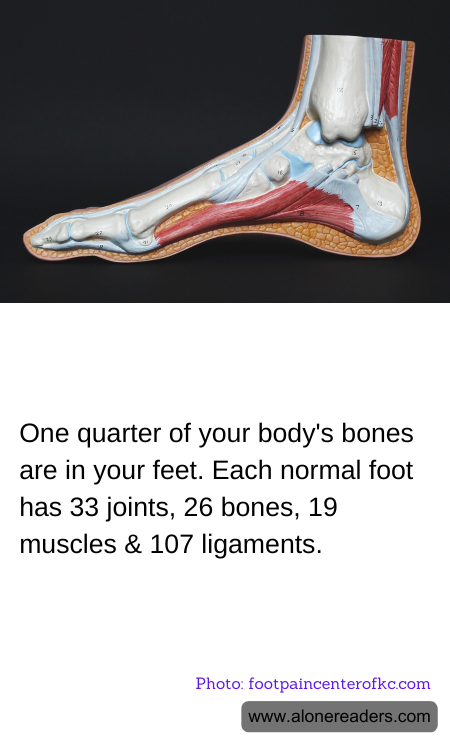
The human body is a marvel of engineering, with each part playing a crucial role in our daily lives. Among its many wonders, the feet stand out as a remarkable example of intricate design and functionality. Surprisingly, one quarter of the bones in the human body are located in the feet, highlighting their complexity and importance.
Each foot is a masterpiece of anatomical architecture, consisting of 26 bones. These bones are meticulously arranged to provide support, balance, and mobility. The foot's structure allows it to absorb the impact of walking, running, and jumping, while also providing the flexibility needed for various movements. The bones in the feet are categorized into three groups: the tarsal bones, which form the back part of the foot; the metatarsal bones, which make up the middle section; and the phalanges, which are the bones in the toes.
In addition to the bones, each foot contains 33 joints. These joints are essential for movement and flexibility, allowing the foot to adapt to different surfaces and activities. The joints work in harmony with the foot's 19 muscles, which provide the strength and control needed for precise movements. These muscles are responsible for various functions, such as lifting the toes, supporting the arch, and enabling the foot to push off the ground during walking or running.
The foot's intricate design is further enhanced by its 107 ligaments. Ligaments are tough, fibrous tissues that connect bones to other bones, providing stability and support. They play a crucial role in maintaining the foot's structure and preventing injuries. The ligaments in the foot work tirelessly to keep the bones aligned and the joints functioning smoothly, even under the stress of daily activities.
The complexity of the foot is a testament to its evolutionary development, allowing humans to walk upright and perform a wide range of activities. The foot's design has enabled humans to adapt to various environments, from rocky terrains to smooth pavements, making it an essential component of our mobility and survival.
Understanding the anatomy of the foot can also help us appreciate the importance of foot care. Given the foot's complexity and the demands placed on it, taking care of our feet is crucial for maintaining overall health and well-being. Proper footwear, regular exercise, and attention to any discomfort or pain can help keep our feet healthy and functioning optimally.
In conclusion, the human foot is a remarkable structure, with its 26 bones, 33 joints, 19 muscles, and 107 ligaments working together to provide support, balance, and mobility. Its complexity and functionality are a testament to the incredible design of the human body, reminding us of the importance of taking care of our feet to ensure a lifetime of movement and activity.