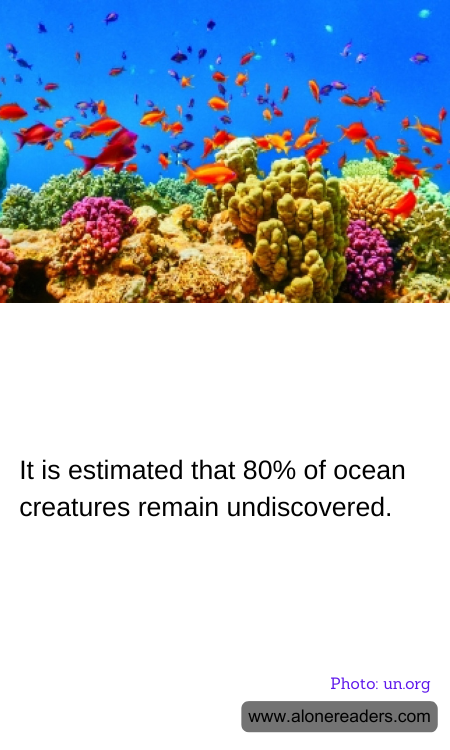
The vastness of the ocean has always been a source of wonder and mystery, captivating the human imagination for centuries. Despite the technological advancements and scientific endeavors of the modern age, it is estimated that a staggering 80% of ocean creatures remain undiscovered. This statistic not only highlights the enormity of the ocean's depths but also underscores the potential for new discoveries that could redefine our understanding of marine life and ecosystems.
The ocean covers more than 70% of the Earth's surface, yet much of it remains unexplored. The sheer depth and pressure of the ocean's abyssal zones make exploration a formidable challenge. These regions are often inaccessible to traditional research methods, requiring specialized equipment and technology to withstand the extreme conditions. As a result, many species that inhabit these depths have yet to be observed or cataloged by scientists. The discovery of new species is not just a matter of curiosity; it holds significant implications for biodiversity, ecology, and even medicine. Many marine organisms possess unique adaptations that could inspire new technologies or lead to breakthroughs in pharmaceuticals.
The potential for discovery is not limited to the deep sea. Coastal and mid-ocean regions also harbor a wealth of undiscovered species. Coral reefs, often referred to as the "rainforests of the sea," are home to an incredible diversity of life, much of which remains undocumented. These ecosystems are vital to the health of the ocean and provide essential services such as carbon sequestration, coastal protection, and habitat for countless marine organisms. Understanding the full extent of biodiversity within these ecosystems is crucial for their conservation and management.
The quest to uncover the mysteries of the ocean is more urgent than ever. Human activities, such as overfishing, pollution, and climate change, pose significant threats to marine ecosystems. The loss of species we have yet to discover could have unforeseen consequences on the delicate balance of oceanic life. By investing in ocean exploration and research, we can better understand and protect these vital ecosystems for future generations.
Inspiring curiosity and fostering a sense of stewardship for the ocean is essential for its preservation. Educational initiatives and public engagement can play a crucial role in raising awareness about the importance of ocean exploration. By highlighting the wonders of the ocean and the potential for discovery, we can encourage a new generation of scientists, explorers, and conservationists to continue the quest to uncover the secrets of the deep.
The ocean remains one of the last frontiers on Earth, teeming with life and mystery. As we continue to explore its depths, we are reminded of the vastness of our planet and the endless possibilities that lie beneath the waves. The journey to discover the remaining 80% of ocean creatures is not just a scientific endeavor; it is a testament to human curiosity and our enduring connection to the natural world.
