More About This Card
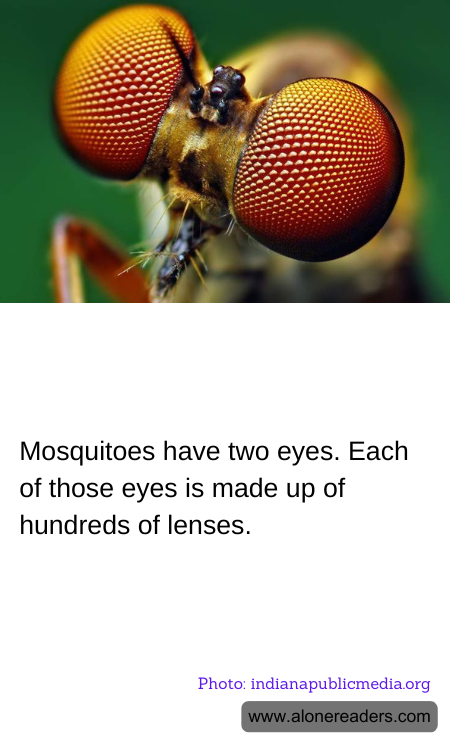
Mosquitoes, often considered one of nature's most persistent pests, possess a fascinating visual system that is both intricate and highly effective. Despite their diminutive size, mosquitoes have a pair of compound eyes that are marvels of biological engineering. Each of these eyes is composed of hundreds of tiny lenses, known as ommatidia, which work together to provide the mosquito with a wide field of vision and acute sensitivity to movement.
The compound eyes of a mosquito are designed to detect even the slightest changes in their environment. Each ommatidium functions as an individual photoreceptive unit, capturing light and contributing to the mosquito's overall perception of its surroundings. This multi-lens structure allows mosquitoes to have a mosaic view of the world, enabling them to detect movement with remarkable precision. This capability is crucial for their survival, as it aids them in locating hosts for feeding and avoiding potential threats.
The unique arrangement of lenses in a mosquito's eyes provides them with a nearly panoramic view, which is essential for navigating their environment. Unlike human eyes, which focus on a single point, the compound eyes of mosquitoes allow them to detect motion across a wide area. This ability is particularly advantageous when mosquitoes are in flight, as it helps them swiftly respond to the movements of their prey or predators. The sensitivity to movement is one of the reasons mosquitoes are so adept at evading swats and other attempts to deter them.
In addition to their compound eyes, mosquitoes also possess simple eyes, known as ocelli, which are used to detect changes in light intensity. These simple eyes help mosquitoes orient themselves and maintain stability during flight. The combination of compound and simple eyes provides mosquitoes with a comprehensive visual system that is finely tuned to their ecological needs.
Understanding the complexity of a mosquito's vision not only highlights the intricacies of their biology but also underscores the challenges in controlling their populations. As vectors for diseases such as malaria, dengue fever, and Zika virus, mosquitoes pose significant public health risks. Insights into their visual systems can inform the development of more effective strategies for mosquito control, potentially leading to innovations in repellents and traps that exploit their visual capabilities.
In conclusion, the compound eyes of mosquitoes, with their hundreds of lenses, are a testament to the evolutionary adaptations that have enabled these insects to thrive in diverse environments. Their sophisticated visual system allows them to be highly effective in locating hosts and evading threats, making them one of the most successful and resilient species on the planet. Understanding these mechanisms not only satisfies scientific curiosity but also provides valuable knowledge for efforts to mitigate the impact of mosquitoes on human health.