More About This Card
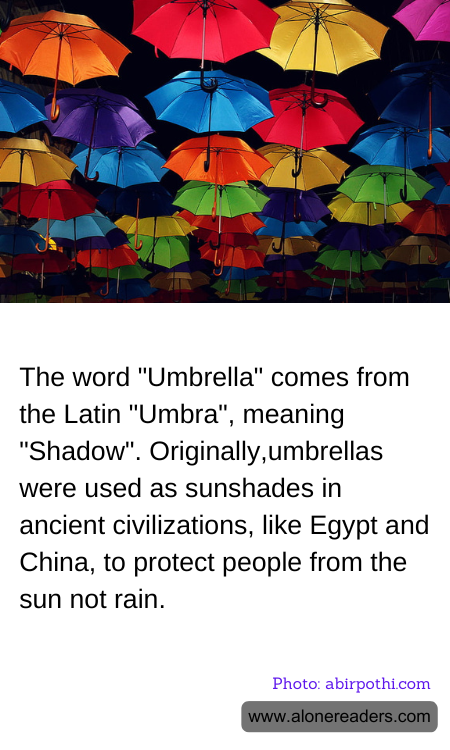
The word "umbrella" has an intriguing etymology that traces back to the Latin word "umbra," which means "shadow." This origin story is fitting, as the earliest umbrellas were not designed to shield people from rain, but rather to provide protection from the sun. These ancient sunshades were a symbol of status and luxury, used by the elite in civilizations such as Egypt and China.
In ancient Egypt, umbrellas were a sign of nobility and were often depicted in art and hieroglyphs. They were crafted from palm leaves or feathers and mounted on long handles, providing shade to the pharaohs and high-ranking officials. The use of umbrellas in Egypt was not merely practical; it was also ceremonial, representing the divine protection of the gods.
Similarly, in ancient China, umbrellas were a mark of prestige. The earliest Chinese umbrellas were made from silk or paper, stretched over bamboo frames. They were often ornately decorated, reflecting the wealth and status of their owners. The Chinese also believed that umbrellas had spiritual significance, offering protection against evil spirits. The use of umbrellas in China dates back to at least the Zhou Dynasty, around 1,000 BCE, and they were primarily used by the nobility and the imperial family.
As time progressed, the concept of the umbrella spread across cultures and continents. In Greece and Rome, umbrellas were used by women of high social standing to maintain their fair complexions, which were considered a sign of beauty and aristocracy. The Romans even had a collapsible version of the umbrella, showcasing their engineering prowess.
It wasn't until the 17th century that umbrellas began to be associated with rain protection. This shift occurred in Europe, where the unpredictable weather necessitated a more practical use for the umbrella. The design evolved to include waterproof materials, making it a staple accessory for rainy days. By the 18th century, the umbrella had become a common sight in England, with both men and women using it to shield themselves from the elements.
Today, the umbrella is a ubiquitous item found in households worldwide, serving its dual purpose of providing shade from the sun and protection from the rain. Its evolution from a symbol of status to a practical everyday tool reflects the adaptability of human innovation. Despite its humble beginnings as a sunshade, the umbrella remains a testament to the ingenuity of ancient civilizations and their influence on modern society.