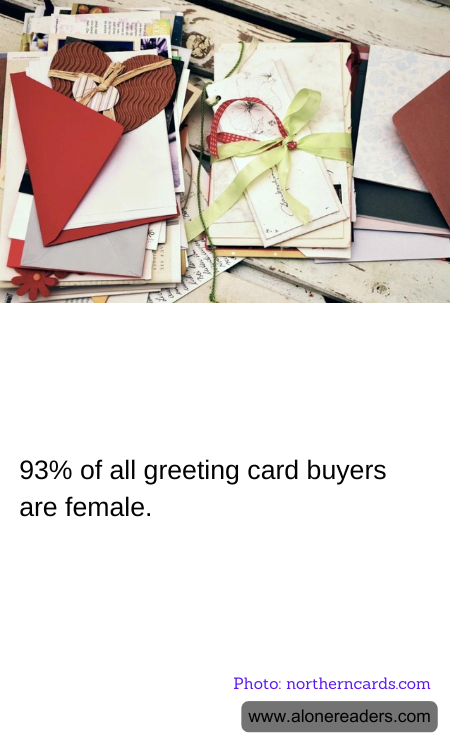
In the world of greeting cards, a surprising statistic emerges: 93% of all greeting card buyers are female. This figure highlights a significant gender disparity in the purchasing habits within this industry, offering insights into consumer behavior and the cultural significance of greeting cards.
Greeting cards have long been a staple in expressing sentiments, celebrating milestones, and maintaining social connections. They serve as tangible tokens of affection, sympathy, or congratulations, often carrying more emotional weight than digital messages. The predominance of female buyers in this market can be attributed to several factors, including traditional gender roles, emotional expression, and social expectations.
Historically, women have been seen as the primary caretakers of social relationships, often taking on the role of nurturing and maintaining family and community bonds. This cultural expectation may contribute to their higher engagement in purchasing greeting cards, as they are more likely to be the ones sending birthday wishes, holiday greetings, or thank-you notes. Additionally, women are often socialized to express emotions more openly, making them more inclined to use greeting cards as a medium for conveying heartfelt messages.
The greeting card industry has responded to this demographic trend by tailoring products to appeal to female consumers. Many cards feature designs, colors, and themes that resonate with women, such as floral patterns, heartfelt messages, and elegant typography. This targeted marketing strategy not only caters to the preferences of female buyers but also reinforces their role as the primary consumers in this market.
However, the predominance of female buyers does not mean that men are absent from the greeting card scene. Men may purchase cards for specific occasions or when prompted by social norms, such as Valentine's Day or Mother's Day. Nonetheless, the frequency and variety of their purchases tend to be lower compared to their female counterparts.
This gender disparity in greeting card purchasing also reflects broader societal trends in consumer behavior. Women are often seen as the primary decision-makers in household purchases, a role that extends beyond greeting cards to other consumer goods. This dynamic underscores the importance of understanding gender influences in marketing and product development.
As the greeting card industry continues to evolve, it is essential to recognize and address the diverse needs and preferences of all consumers. While women currently dominate the market, there is potential for growth by engaging male buyers and expanding the range of products to appeal to a broader audience. By doing so, the industry can foster inclusivity and ensure that greeting cards remain a cherished means of communication for everyone.
In conclusion, the statistic that 93% of greeting card buyers are female sheds light on the intricate relationship between gender roles and consumer behavior. It highlights the cultural significance of greeting cards as tools for emotional expression and social connection, predominantly driven by women. As societal norms continue to shift, the greeting card industry has the opportunity to adapt and embrace a more diverse consumer base, ensuring that the tradition of sending heartfelt messages endures for generations to come.
