More About This Card
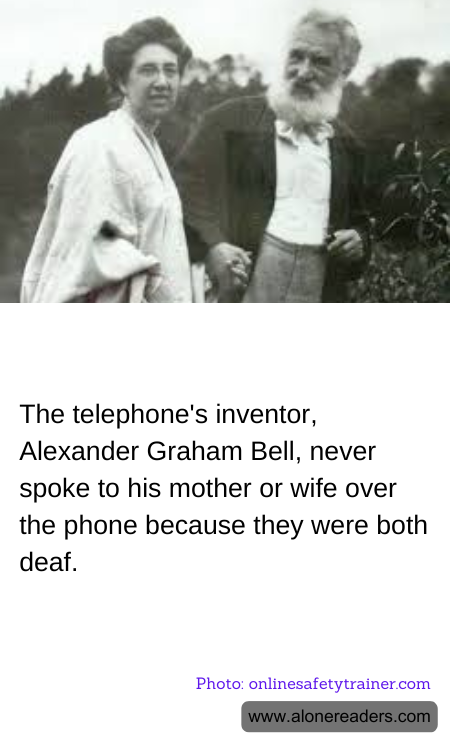
Alexander Graham Bell, a name synonymous with the invention of the telephone, is celebrated for his groundbreaking work in communication technology. Yet, an intriguing and poignant aspect of his life is that he never had the opportunity to speak with two of the most important women in his life—his mother and his wife—over the very device he invented. Both women were deaf, a fact that profoundly influenced Bell's work and personal life.
Born in Edinburgh, Scotland, in 1847, Bell was immersed in the world of sound and communication from an early age. His father, Alexander Melville Bell, was a renowned teacher of elocution, and his mother, Eliza Grace Symonds Bell, despite being deaf, was an accomplished pianist and a source of inspiration for Bell. Her ability to "hear" music through vibrations and her reliance on lip-reading and sign language deeply affected Bell's understanding of communication barriers faced by the deaf community.
Bell's personal connection to the deaf community was further solidified when he married Mabel Gardiner Hubbard in 1877. Mabel had lost her hearing at the age of five due to a near-fatal bout of scarlet fever. Despite her hearing impairment, Mabel was a highly educated and articulate woman who communicated through lip-reading and speech. Bell's love for Mabel and his mother fueled his passion for developing technologies that could bridge the communication gap for the hearing impaired.
While Bell is best known for inventing the telephone, his work extended far beyond this singular achievement. He dedicated much of his life to improving the lives of the deaf and hard of hearing. Bell was a teacher at the Boston School for Deaf Mutes and later founded a school in Boston to train teachers of the deaf. His commitment to this cause was unwavering, and he was a strong advocate for oralism, a method of teaching deaf individuals to speak and read lips rather than relying solely on sign language.
The irony of Bell's invention is not lost on history. The telephone, a device that revolutionized global communication, was not a tool he could use to connect with his mother or wife in the traditional sense. However, Bell's work laid the foundation for future advancements in communication technology, including devices that would eventually aid the deaf and hard of hearing.
Bell's legacy is a testament to the power of personal experience in driving innovation. His life's work was not just about inventing a device but about breaking down barriers and creating opportunities for those who, like his mother and wife, faced challenges in a world designed for the hearing. Through his dedication and vision, Bell not only transformed the way people communicate but also highlighted the importance of inclusivity and accessibility in technological advancement.