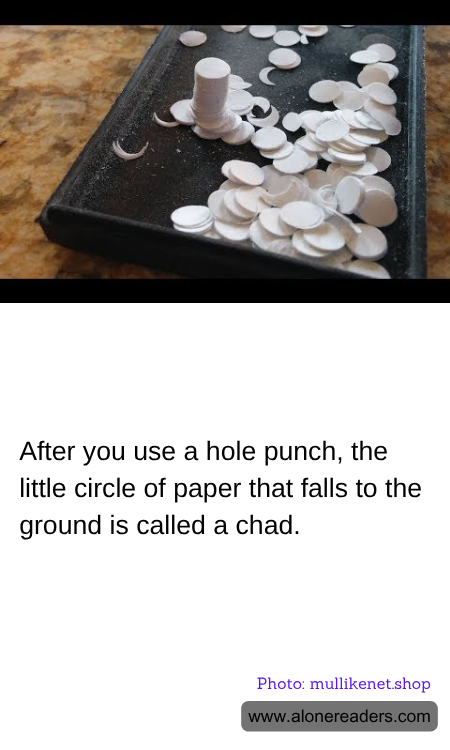
In the world of office supplies, few tools are as ubiquitous and yet as underappreciated as the humble hole punch. This simple device, often found in classrooms, offices, and home study areas, serves a straightforward purpose: to create neat, uniform holes in sheets of paper. However, the byproduct of this process, the tiny circle of paper that falls to the ground, has a name that is less commonly known. These small paper circles are called "chads."
The term "chad" might evoke memories for some, particularly those who recall the infamous 2000 U.S. presidential election, where "hanging chads" became a household phrase. In that context, chads referred to the small pieces of paper punched out of ballots, which sometimes failed to detach completely, leading to voting discrepancies. However, outside of the electoral process, chads are simply the remnants of paper left behind after using a hole punch.
Chads are often overlooked, swept away, or discarded without a second thought. Yet, they hold a certain charm and potential for creativity. In classrooms, teachers and students might collect chads for art projects, using them to create colorful mosaics or confetti for celebrations. In offices, they can be a playful nuisance, sometimes finding their way into practical jokes or impromptu desk decorations. Despite their small size, chads can add a touch of whimsy to an otherwise mundane environment.
The creation of chads is a testament to the efficiency of the hole punch, a tool that has remained largely unchanged since its invention in the late 19th century. While modern technology has introduced digital alternatives for document management, the physical act of punching holes in paper continues to hold its place in both personal and professional settings. The chads that result from this process are a reminder of the tactile nature of working with paper, a medium that persists despite the digital age.
For those who are environmentally conscious, chads can also be seen as an opportunity for recycling. Rather than discarding them, chads can be collected and added to paper recycling bins, contributing to the sustainable cycle of paper production. This small act can help reduce waste and promote environmental responsibility, turning what might otherwise be considered litter into a resource.
In essence, the chad is a small but significant part of the paper-punching process. It serves as a reminder of the physicality of paper, the creativity it can inspire, and the responsibility we have to manage waste thoughtfully. Whether used in art projects, recycled, or simply swept away, chads are a testament to the enduring relevance of paper in our daily lives. So, the next time you use a hole punch, take a moment to appreciate the humble chad and the role it plays in the world of paper.
