More About This Card
In the vast savannas of Africa, where the horizon stretches endlessly and the acacia trees dot the landscape, one of nature's most fascinating creatures roams gracefully—the giraffe. Known for their towering necks and distinctive spotted patterns, giraffes captivate the imagination with their unique adaptations. Among these adaptations is a particularly intriguing behavior: the ability to clean their ears and nose using their own tongue.
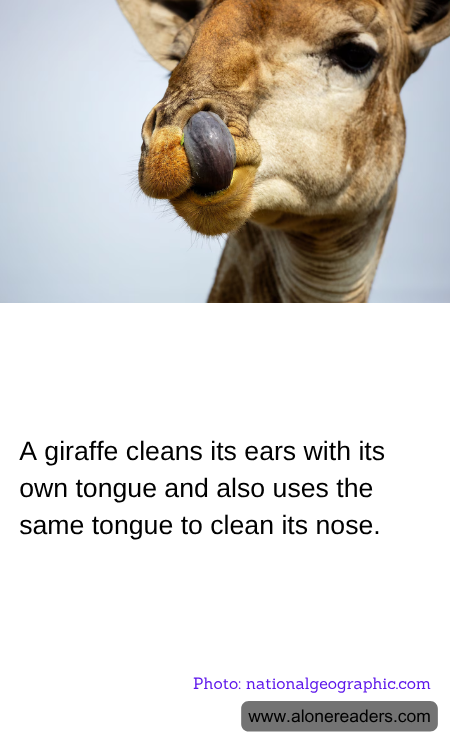
The giraffe's tongue is a marvel of nature, measuring up to 18 to 20 inches in length. This prehensile organ is not only long but also incredibly flexible and dexterous, allowing giraffes to perform tasks that might seem impossible for other animals. The tongue's dark coloration, ranging from purplish to bluish-black, is thought to protect it from sunburn as giraffes spend long hours foraging under the African sun.
One of the most remarkable uses of the giraffe's tongue is its ability to clean its own ears. This might seem like a peculiar behavior, but it is a testament to the giraffe's adaptability and resourcefulness. By curling its tongue into its ears, a giraffe can remove dirt and debris, maintaining hygiene and preventing infections. This self-cleaning mechanism is crucial for an animal that lives in a dusty environment and often encounters insects and other irritants.
In addition to ear cleaning, giraffes also use their tongues to clean their noses. This behavior is not just about hygiene; it also plays a role in the giraffe's social interactions and communication. By keeping their nasal passages clear, giraffes can better detect scents in their environment, which is essential for identifying food sources, recognizing other giraffes, and avoiding predators.
The giraffe's tongue is a versatile tool that serves multiple purposes beyond personal grooming. It is instrumental in feeding, allowing giraffes to reach and strip leaves from thorny branches with precision. The tongue's tough, leathery texture protects it from the sharp thorns of acacia trees, which are a staple in the giraffe's diet. This adaptation enables giraffes to access food sources that are out of reach for many other herbivores.
The giraffe's ability to clean its ears and nose with its tongue is a fascinating example of how animals evolve specialized traits to thrive in their environments. This behavior highlights the giraffe's ingenuity and the intricate balance of nature, where every adaptation serves a purpose in the survival and well-being of the species.
For those who marvel at the wonders of the animal kingdom, the giraffe's tongue is a reminder of the incredible diversity and complexity of life on Earth. It is a testament to the ingenuity of evolution and the endless ways in which animals adapt to their surroundings. Whether observed in the wild or in the pages of a nature documentary, the giraffe continues to inspire awe and admiration with its unique characteristics and behaviors.