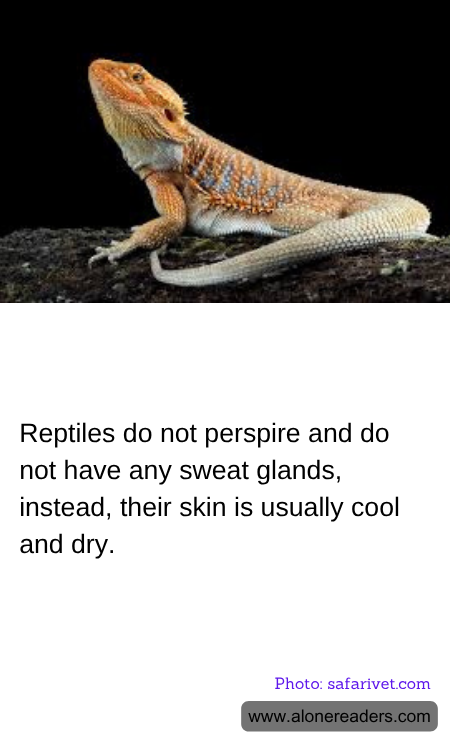
Reptiles are fascinating creatures that have adapted to a wide range of environments, from the scorching deserts to lush rainforests. One of the most intriguing aspects of their biology is their unique skin, which plays a crucial role in their survival. Unlike mammals, reptiles do not perspire and lack sweat glands. This absence of sweat glands is a significant evolutionary adaptation that helps them conserve water in often arid and hot habitats.
The skin of reptiles is typically cool and dry, a stark contrast to the moist skin of amphibians or the sweat-covered skin of mammals. This dryness is due to the presence of scales, which are made of keratin, the same protein found in human hair and nails. These scales provide a protective barrier against the environment, reducing water loss and offering defense against predators and harsh weather conditions. The coolness of their skin is not a result of internal temperature regulation, as reptiles are ectothermic, meaning they rely on external heat sources to regulate their body temperature. Instead, their skin's coolness is often a reflection of their surroundings.
Reptiles have developed various behavioral adaptations to manage their body temperature and hydration levels. For instance, many reptiles bask in the sun to absorb heat and increase their body temperature. This behavior is crucial for their metabolism, digestion, and overall activity levels. Conversely, when temperatures rise too high, reptiles seek shade or burrow into the ground to avoid overheating. This ability to move between different microhabitats allows them to maintain an optimal body temperature without the need for sweating.
The lack of sweat glands also means that reptiles have to be particularly efficient in their water usage. They obtain moisture primarily from their diet, which often includes water-rich prey or plants. Some desert-dwelling reptiles have even developed the ability to absorb moisture directly through their skin or from the air, showcasing their incredible adaptability.
In conclusion, the absence of sweat glands in reptiles is a remarkable adaptation that highlights their evolutionary success in diverse environments. Their cool, dry skin, coupled with behavioral strategies, allows them to thrive in conditions that would be challenging for other animals. Understanding these unique characteristics not only sheds light on the fascinating world of reptiles but also underscores the incredible diversity of life on our planet. Whether you're a budding herpetologist or simply a curious nature enthusiast, the study of reptiles offers endless opportunities for discovery and wonder.
