More About This Card
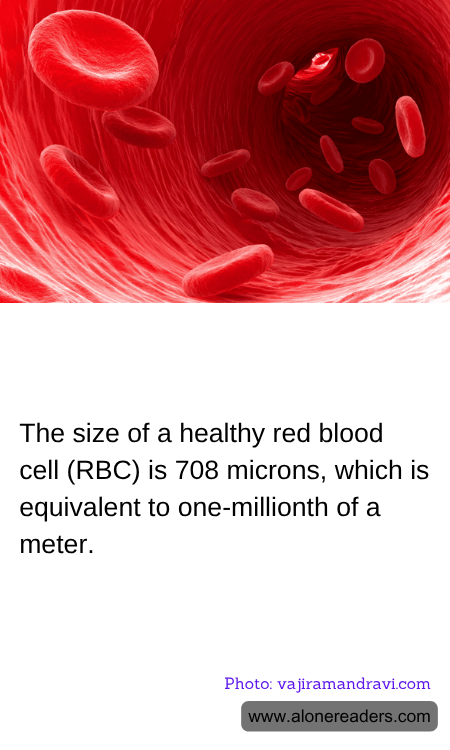
Red blood cells (RBCs) are a vital component of the human circulatory system, responsible for transporting oxygen from the lungs to the rest of the body and returning carbon dioxide for exhalation. These cells are remarkable not only for their function but also for their size. A healthy red blood cell typically measures about 7 to 8 microns in diameter, which is equivalent to seven to eight millionths of a meter. This minuscule size allows RBCs to navigate through the narrowest of blood vessels, ensuring efficient oxygen delivery throughout the body.
The small size of red blood cells is crucial for their function. Their biconcave shape, resembling a doughnut without a hole, increases their surface area relative to volume, facilitating the rapid exchange of gases. This shape also provides flexibility, allowing them to deform as they pass through capillaries that are sometimes even narrower than the cells themselves. The ability of RBCs to squeeze through these tiny vessels is essential for maintaining proper circulation and ensuring that every tissue receives the oxygen it needs to function optimally.
Understanding the size of red blood cells also provides insight into various medical conditions. For instance, in anemia, the size and shape of RBCs can be altered, affecting their ability to carry oxygen efficiently. Conditions like microcytic anemia result in smaller than normal RBCs, while macrocytic anemia involves larger cells. Both conditions can lead to symptoms such as fatigue and weakness due to insufficient oxygen delivery to tissues. Thus, the size of RBCs is not just a trivial detail but a critical factor in diagnosing and understanding different health issues.
In addition to their role in health, the study of red blood cells and their size has broader implications in medical research and technology. For example, understanding how RBCs navigate the circulatory system can inspire the design of micro-robots or drug delivery systems that mimic their ability to travel through the body's intricate network of vessels. This could lead to advancements in targeted therapies and minimally invasive treatments.
In conclusion, the size of a healthy red blood cell, though seemingly insignificant at 7 to 8 microns, plays a crucial role in its ability to perform its life-sustaining functions. This tiny cell is a marvel of biological engineering, perfectly adapted to its role in the human body. Its size and shape not only facilitate efficient oxygen transport but also provide valuable insights into health and disease, making it a subject of ongoing research and fascination in the scientific community.