More About This Card
Hair color is one of the most noticeable traits that can vary widely among individuals, and it turns out that it also correlates with the number of hair strands on a person's head. While hair color is often a matter of personal style and preference, the natural color of one's hair can offer intriguing insights into the biology of hair growth and density.
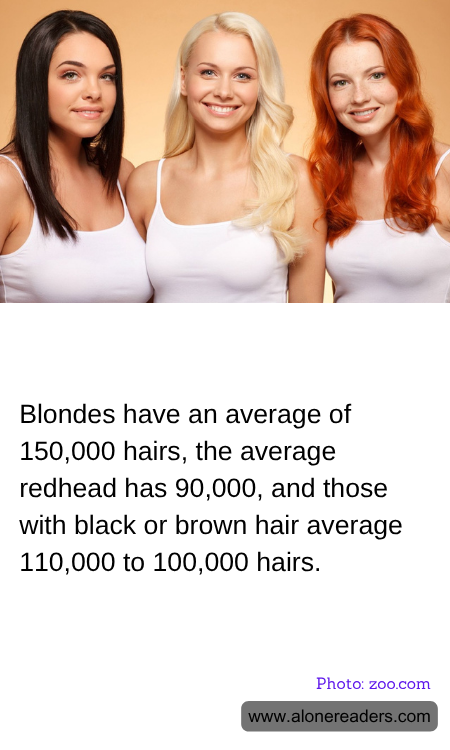
Blondes, for instance, are known to have the highest average number of hair strands, with approximately 150,000 hairs. This abundance of hair can be attributed to the finer texture of blonde hair, which allows for more strands to occupy the same amount of scalp space compared to thicker hair types. The lighter color of blonde hair is due to lower levels of melanin, the pigment responsible for hair color, which also contributes to the hair's finer texture.
In contrast, redheads typically have fewer hair strands, averaging around 90,000. Red hair is the rarest natural hair color, and its unique hue is the result of a specific type of melanin called pheomelanin. Despite having fewer strands, red hair is often thicker and coarser, which can give the appearance of a fuller head of hair even with a lower strand count. This thickness compensates for the lower density, making red hair stand out in its own right.
Individuals with black or brown hair fall somewhere in between, with an average of 110,000 to 100,000 hairs. These hair colors are the most common worldwide and are characterized by higher levels of eumelanin, the pigment that gives hair its dark color. The density of black or brown hair is balanced by its moderate thickness, providing a rich and full appearance without the extreme fineness of blonde hair or the coarseness of red hair.
The differences in hair strand count and texture among various hair colors highlight the fascinating diversity of human genetics. While the number of hair strands can influence the overall look and feel of one's hair, it is just one of many factors that contribute to the unique characteristics of each individual's hair. Hair care routines, environmental factors, and overall health also play significant roles in maintaining the vitality and appearance of hair.
Understanding these variations can help individuals appreciate the natural beauty of their hair and make informed decisions about hair care and styling. Whether one has a head full of fine blonde strands, a mane of thick red hair, or the rich density of black or brown locks, each hair type has its own charm and requires specific care to keep it looking its best. Embracing the natural attributes of one's hair can lead to healthier hair and a more confident self-image, celebrating the diversity that makes each person unique.