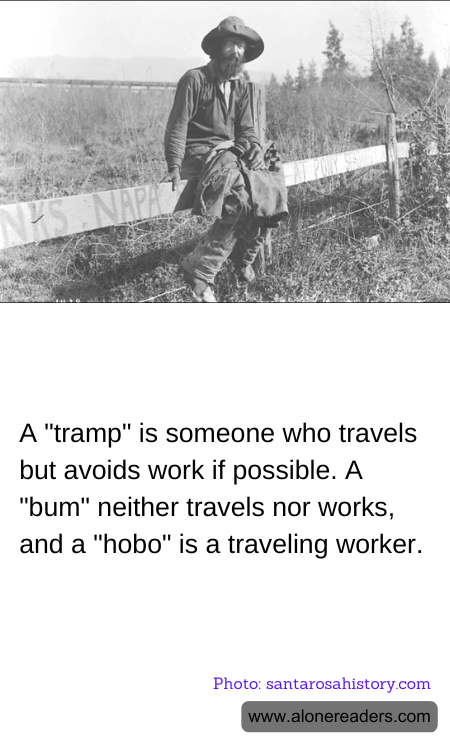
In the rich tapestry of American folklore and cultural history, the figures of the tramp, the bum, and the hobo stand out as distinct archetypes, each embodying a unique relationship with work and travel. These terms, often used interchangeably in casual conversation, actually describe different lifestyles and attitudes towards labor and mobility.
A "tramp" is a person who travels extensively, often with no fixed destination, but who avoids work whenever possible. The tramp's journey is characterized by a sense of wanderlust and a desire for freedom from the constraints of conventional employment. Tramps are often seen as romantic figures, embodying the spirit of adventure and the pursuit of personal freedom. They move from place to place, relying on the kindness of strangers or their own resourcefulness to get by. This lifestyle, while seemingly carefree, can also be precarious, as it depends heavily on the ability to find sustenance and shelter without the stability that regular work provides.
In contrast, a "bum" is someone who neither travels nor works. Bums are often rooted in one location, typically living on the fringes of society. They may rely on public assistance, charity, or informal networks of support to survive. Unlike tramps, bums do not seek out new experiences or adventures. Their lives are often marked by a sense of stagnation and resignation. The term "bum" can carry a negative connotation, suggesting laziness or a lack of ambition. However, it is important to recognize that many people labeled as bums may face significant barriers to employment, such as mental health issues, addiction, or systemic poverty.
The "hobo," on the other hand, is a traveling worker. Hobos are itinerant laborers who move from place to place in search of temporary work. This lifestyle emerged in the late 19th and early 20th centuries, particularly during the Great Depression, when many people were forced to travel to find employment. Hobos are often skilled workers who take pride in their ability to adapt to different jobs and environments. They are part of a distinct subculture with its own traditions, symbols, and code of ethics. Unlike tramps, hobos actively seek out work, and unlike bums, they are constantly on the move.
Understanding these distinctions helps to shed light on the diverse ways people navigate the challenges of work and mobility. Each of these archetypes reflects different responses to economic and social pressures, as well as varying degrees of agency and choice. While the terms tramp, bum, and hobo may seem outdated, they continue to resonate in discussions about homelessness, labor, and the pursuit of freedom. By exploring these identities, we gain insight into the complexities of human behavior and the enduring quest for autonomy and survival in an ever-changing world.
