More About This Card
In the grand arenas of ancient Rome, where the roar of the crowd met the clash of steel, gladiators fought for glory, survival, and the entertainment of the masses. While the image of a gladiator typically conjures up visions of muscular men locked in combat, history reveals a lesser-known yet fascinating aspect of this brutal sport: the existence of female gladiators, known as "gladiatrices."
The gladiatrix was a rare phenomenon in the Roman Empire, a society where gender roles were rigidly defined and women were often relegated to the domestic sphere. Despite these societal constraints, some women broke through the barriers to participate in the gladiatorial games, a testament to their courage and determination. These female warriors were not merely a novelty; they were skilled combatants who trained rigorously to face their opponents in the arena.
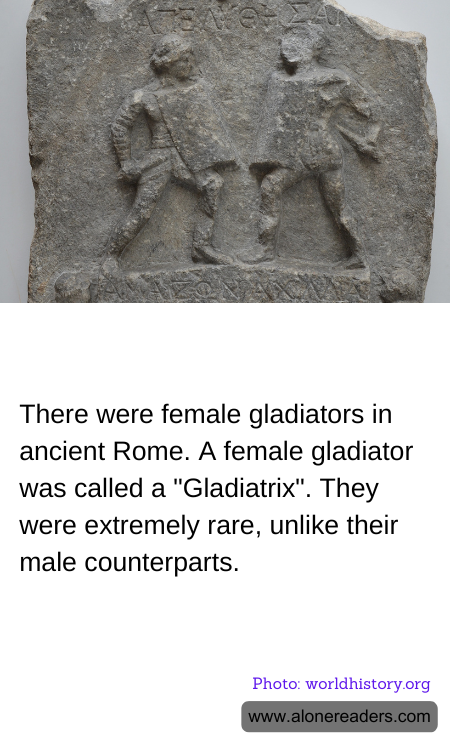
Historical records and archaeological evidence of gladiatrices are sparse, but they provide intriguing glimpses into their lives and the roles they played. One of the most famous accounts comes from the writings of the Roman historian Cassius Dio, who described a spectacle organized by Emperor Nero that featured female gladiators. Additionally, a marble relief from Halicarnassus, now housed in the British Museum, depicts two female gladiators named Amazon and Achillia, who fought to a draw, symbolizing their prowess and equality in combat.
The rarity of female gladiators can be attributed to several factors. The societal norms of ancient Rome discouraged women from participating in activities deemed masculine or violent. Furthermore, the physical demands and dangers of gladiatorial combat were immense, requiring not only strength and skill but also a willingness to face potentially fatal consequences. As a result, only a few women chose or were allowed to take on the mantle of the gladiatrix.
Despite their scarcity, the presence of gladiatrices in the arena challenged traditional gender roles and captivated audiences. Their participation in the games was both a spectacle and a statement, highlighting the complexities of gender and power in ancient Rome. These women, who defied convention to fight alongside men, left an indelible mark on history, demonstrating that courage and skill know no gender.
The legacy of the gladiatrix is a reminder of the diverse and often overlooked narratives that exist within history. While their stories may not be as well-documented as those of their male counterparts, the female gladiators of ancient Rome remain a symbol of strength and resilience. Their existence challenges modern perceptions of the past and invites us to reconsider the roles women have played in shaping history, even in the most unexpected arenas.