More About This Card
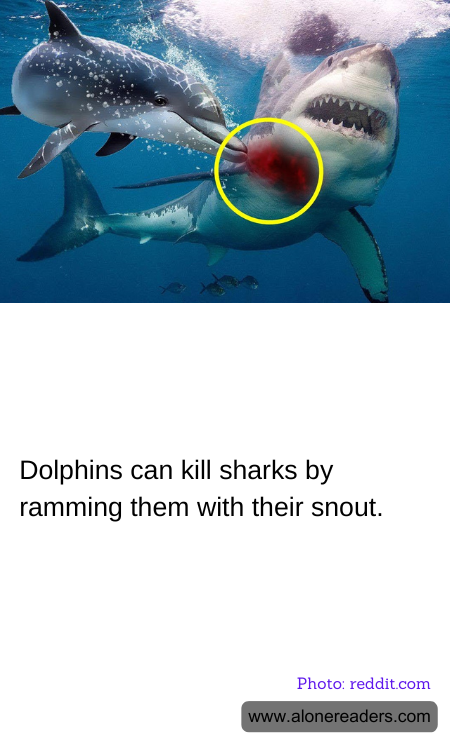
Dolphins, often celebrated for their intelligence and playful nature, possess a surprising and formidable ability to defend themselves against one of the ocean's most feared predators: sharks. While it may seem unlikely that these seemingly gentle creatures could pose a threat to such formidable hunters, dolphins have developed an effective method of self-defense that involves using their snouts as powerful weapons.
The snout of a dolphin, also known as the rostrum, is not just a tool for foraging and communication; it is a robust and versatile instrument capable of delivering significant force. Dolphins are known to use their snouts to ram into sharks, targeting their soft underbellies or gills, which are particularly sensitive areas. This tactic can stun or even kill a shark, providing dolphins with a crucial advantage in the wild.
Dolphins typically travel in groups called pods, which can range from a few individuals to several dozen. This social structure not only enhances their ability to hunt and communicate but also provides safety in numbers. When faced with a shark threat, dolphins will often work together to protect their pod. They may encircle the shark, using coordinated movements to confuse and intimidate it. If necessary, they will take turns ramming the shark with their snouts, demonstrating remarkable teamwork and strategic thinking.
This behavior is not just a random act of aggression but a calculated defense mechanism honed over millions of years of evolution. Dolphins' agility and speed in the water, combined with their acute senses, allow them to outmaneuver sharks, which are generally solitary hunters. The ability to ram sharks with their snouts is a testament to the dolphins' adaptability and resourcefulness in the face of danger.
While the notion of dolphins killing sharks might seem surprising, it is a reminder of the complex and dynamic relationships that exist within marine ecosystems. Dolphins are not only playful and intelligent but also capable of defending themselves and their communities against predators. This aspect of their behavior underscores the importance of understanding and respecting the intricate balance of life in our oceans.
In conclusion, dolphins' ability to kill sharks by ramming them with their snouts is a fascinating example of nature's ingenuity. It highlights the dolphins' role as both prey and predator in the marine food chain and showcases their remarkable adaptability. As we continue to study and learn from these incredible creatures, we gain a deeper appreciation for the diverse and interconnected world beneath the waves.