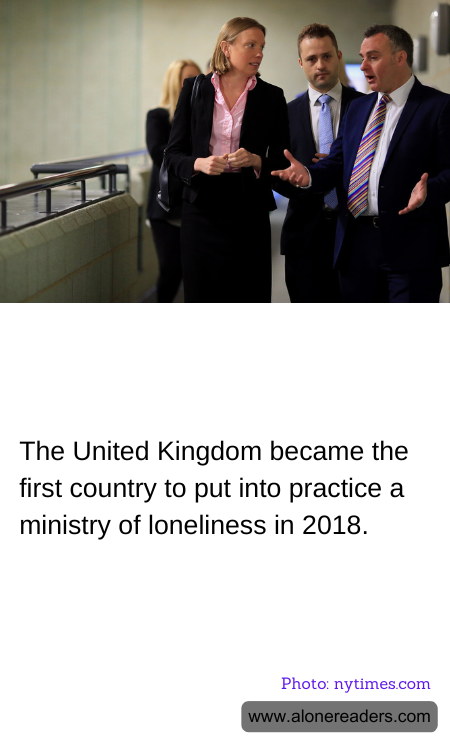
In 2018, the United Kingdom took a pioneering step by becoming the first country to establish a ministry dedicated to addressing loneliness. This bold initiative was a response to growing concerns about the impact of loneliness on public health and well-being. The creation of the Ministry of Loneliness underscored the recognition that loneliness is not just a personal issue but a societal challenge that requires coordinated action.
The decision to establish this ministry was influenced by a report from the Jo Cox Commission on Loneliness, which highlighted the pervasive nature of loneliness across various demographics. Named after the late MP Jo Cox, who was a passionate advocate for social cohesion, the commission's findings revealed that millions of people in the UK experienced feelings of loneliness. This included the elderly, young people, caregivers, and those with disabilities. The report emphasized that loneliness could have severe consequences, comparable to smoking 15 cigarettes a day, and was linked to an increased risk of heart disease, stroke, and depression.
The Ministry of Loneliness was tasked with developing strategies to combat this silent epidemic. It aimed to foster community connections and encourage social interaction through various initiatives. One of its key objectives was to integrate loneliness considerations into public policy, ensuring that government actions across sectors, from health to transportation, took into account their potential impact on social isolation. By doing so, the ministry sought to create an environment where people could build meaningful relationships and support networks.
Community-based projects were at the heart of the ministry's approach. These initiatives ranged from funding local groups that organized social activities to supporting volunteer programs that connected isolated individuals with companions. The ministry also worked closely with charities, businesses, and local governments to create a comprehensive support system. By leveraging technology, such as social media and digital platforms, the ministry aimed to reach younger generations who might experience loneliness in different ways than older adults.
The establishment of the Ministry of Loneliness marked a significant cultural shift in how loneliness was perceived and addressed. It encouraged open conversations about loneliness, reducing the stigma associated with admitting to feeling lonely. This cultural change was crucial in encouraging individuals to seek help and participate in community activities.
While the Ministry of Loneliness was a groundbreaking initiative, it also highlighted the complexity of addressing loneliness. It required ongoing collaboration between government, communities, and individuals to create lasting change. The UK's efforts have inspired other countries to consider similar approaches, recognizing that loneliness is a universal issue that transcends borders.
In conclusion, the UK's Ministry of Loneliness represents a forward-thinking approach to a deeply rooted societal problem. By acknowledging loneliness as a public health concern and taking proactive steps to address it, the UK has set a precedent for other nations. The ministry's work continues to evolve, aiming to create a more connected and compassionate society where no one feels left behind.
