More About This Card
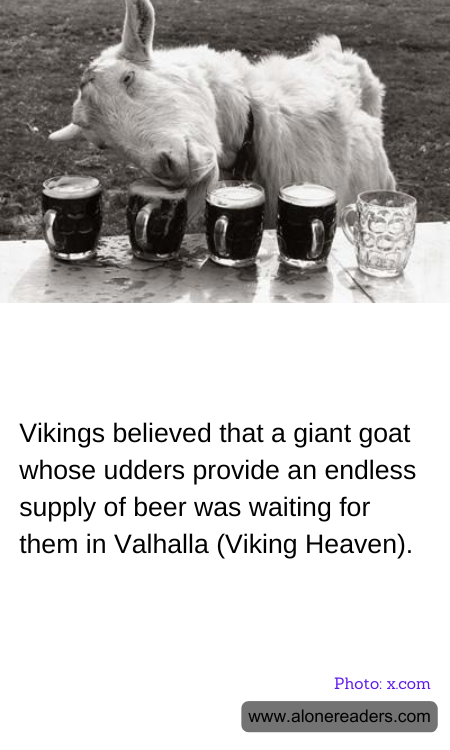
In the rich tapestry of Norse mythology, the afterlife was not merely a place of rest but a realm of eternal feasting and revelry. Among the many fascinating beliefs held by the Vikings, one particularly intriguing notion was that of a giant goat named Heiðrún, whose udders provided an endless supply of beer for the warriors in Valhalla, the Viking paradise.
Valhalla, often depicted as a majestic hall ruled by the god Odin, was reserved for those who had died bravely in battle. It was a place where fallen warriors, known as the Einherjar, would prepare for Ragnarök, the end of the world. In this celestial abode, the warriors would engage in daily battles, only to be resurrected each evening to feast and drink in celebration. Central to these festivities was the mythical goat Heiðrún, whose miraculous ability to produce an unending flow of beer was a source of great delight.
According to the legends, Heiðrún grazed on the leaves of the sacred tree Læraðr, which stood atop Valhalla. From her udders flowed a never-depleting stream of the finest beer, enough to satisfy the thirst of all the warriors gathered in Odin's hall. This imagery of endless beer was not just a testament to the Vikings' love for the beverage but also symbolized abundance and the joys of the afterlife. It painted a picture of Valhalla as a place where earthly pleasures were magnified and eternal.
The concept of Heiðrún and her bountiful beer reflects the Vikings' appreciation for camaraderie and celebration. Beer, a staple in Viking culture, was more than just a drink; it was a symbol of community and festivity. In a world where life was often harsh and uncertain, the promise of an afterlife filled with endless merriment and drink was a comforting and motivating belief.
This mythological narrative also highlights the Vikings' imaginative worldview, where animals and nature played significant roles in the cosmic order. Heiðrún, as a provider of sustenance, underscores the interconnectedness of life and the divine in Norse mythology. Her presence in Valhalla serves as a reminder of the importance of nature and its gifts, even in the afterlife.
For modern audiences, the story of Heiðrún offers a glimpse into the values and beliefs of the Viking age. It illustrates how mythology can shape cultural practices and societal norms, providing insight into how ancient peoples understood their world and the hereafter. As we explore these tales, we are reminded of the enduring human desire for joy, fellowship, and the hope of a bountiful existence beyond this life.
In essence, the legend of Heiðrún and her endless supply of beer is a testament to the Vikings' zest for life and their imaginative vision of the afterlife. It is a story that continues to captivate and inspire, inviting us to reflect on our own beliefs and the ways in which we celebrate life and its many pleasures.