More About This Card
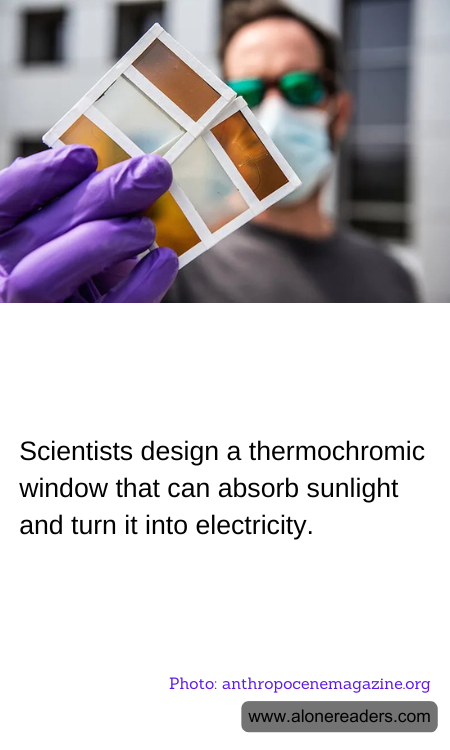
In a groundbreaking development, scientists have designed an innovative thermochromic window that not only changes color with temperature fluctuations but also harnesses sunlight to generate electricity. This dual-functionality window represents a significant leap forward in sustainable building technologies, offering a promising solution to energy efficiency and renewable energy generation in urban environments.
Thermochromic materials have long been studied for their ability to change color in response to temperature changes. This property is now being ingeniously applied to windows, allowing them to modulate the amount of light and heat entering a building. The new thermochromic window technology goes a step further by integrating photovoltaic capabilities, enabling the window to convert absorbed sunlight into electrical energy. This dual-purpose design not only helps regulate indoor temperatures but also contributes to the building's energy supply, reducing reliance on external power sources.
The technology behind these windows involves a sophisticated layering of materials. The outermost layer is made of a thermochromic material that adjusts its transparency based on the temperature. When the temperature rises, the window becomes less transparent, reducing the amount of heat entering the building and thus lowering cooling costs. Beneath this layer lies a photovoltaic film that captures sunlight and converts it into electricity. This electricity can be used to power various building systems or be stored for later use, enhancing the building's overall energy efficiency.
One of the most exciting aspects of this technology is its potential to transform urban landscapes. In densely populated cities where space is at a premium, integrating energy-generating windows into skyscrapers and office buildings could significantly reduce the carbon footprint of these structures. By turning every window into a mini solar panel, buildings can become self-sustaining powerhouses, contributing to a cleaner, greener urban environment.
Moreover, the aesthetic appeal of thermochromic windows cannot be overlooked. As they change color with the temperature, these windows can give buildings a dynamic and modern appearance, enhancing architectural design while serving a practical purpose. This blend of functionality and style makes them an attractive option for architects and builders looking to incorporate sustainable technologies into their projects.
While still in the developmental stages, the potential applications of thermochromic windows are vast. Researchers are optimistic about scaling up production and reducing costs to make this technology accessible to a wider market. As the world continues to grapple with the challenges of climate change and energy consumption, innovations like these offer a glimpse into a future where buildings are not just passive structures but active participants in energy conservation and generation.
In conclusion, the development of thermochromic windows that can absorb sunlight and convert it into electricity marks a significant advancement in sustainable building technology. By combining energy efficiency with renewable energy generation, these windows offer a promising solution to the environmental challenges facing modern cities. As research and development continue, we can look forward to seeing these innovative windows become a common feature in the architecture of tomorrow.