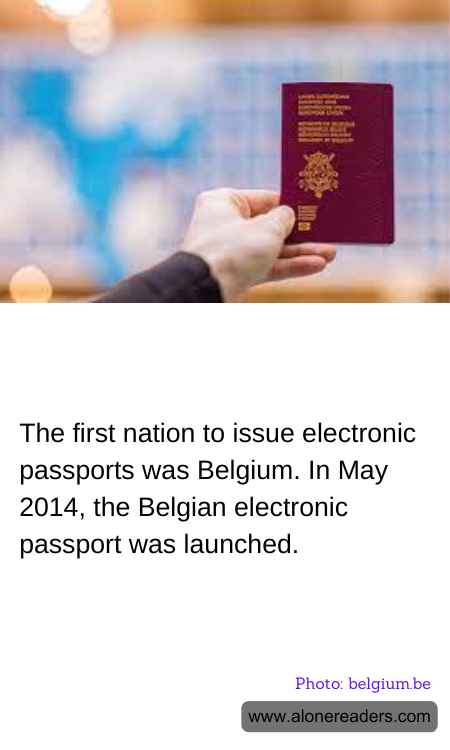
In the realm of global travel, the passport is an essential document that serves as a key to international exploration. Over the years, passports have evolved significantly, adapting to the changing needs of security and technology. A landmark moment in this evolution occurred in May 2014 when Belgium became the first nation to issue electronic passports, setting a precedent for countries worldwide.
The introduction of the Belgian electronic passport marked a significant advancement in travel documentation. This innovative passport incorporated a microchip embedded within its pages, containing biometric information such as the holder's photograph and fingerprints. This technology was designed to enhance security and streamline the process of identity verification at border controls. By storing biometric data, the electronic passport significantly reduced the risk of forgery and identity theft, offering travelers a more secure means of identification.
Belgium's pioneering move was not only a testament to its commitment to enhancing national security but also a reflection of its forward-thinking approach to technological integration. The electronic passport was part of a broader initiative to modernize travel documents and improve the efficiency of border management. By adopting this technology, Belgium positioned itself as a leader in the field of secure travel documentation, influencing other nations to follow suit.
The impact of Belgium's electronic passport extended beyond its borders. It set a new standard for international travel, prompting other countries to consider the adoption of similar technologies. The success of the Belgian model demonstrated the benefits of electronic passports, including faster processing times at airports and increased protection against fraudulent activities. As a result, many countries began to explore the implementation of electronic passports, leading to a global shift towards more secure and efficient travel documentation.
The introduction of the electronic passport also highlighted the importance of international cooperation in the realm of travel security. As more countries adopted electronic passports, there was a growing need for standardized protocols and systems to ensure compatibility and interoperability. This led to increased collaboration among nations, fostering a spirit of unity in the pursuit of safer and more efficient global travel.
In conclusion, Belgium's launch of the electronic passport in May 2014 was a groundbreaking development in the world of travel documentation. By embracing cutting-edge technology, Belgium not only enhanced its own national security but also set a benchmark for other countries to follow. The electronic passport revolutionized the way we think about travel documents, paving the way for a future where secure and efficient international travel is accessible to all. As we continue to navigate the complexities of global travel, Belgium's pioneering spirit serves as a reminder of the power of innovation in shaping a safer and more connected world.
