More About This Card
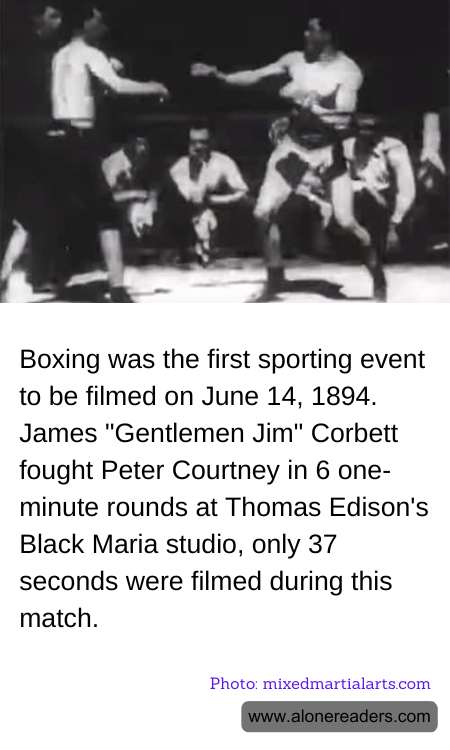
In the annals of sports history, June 14, 1894, holds a special place as the day when boxing became the first sporting event to be captured on film. This pioneering moment took place at Thomas Edison's Black Maria studio in West Orange, New Jersey, marking a significant intersection between the burgeoning world of cinema and the age-old sport of boxing. The event featured James "Gentleman Jim" Corbett, a celebrated heavyweight champion known for his scientific approach to boxing, and Peter Courtney, a lesser-known but formidable opponent.
The match was staged specifically for the cameras, a testament to the growing interest in both sports and motion pictures at the time. Corbett and Courtney engaged in six one-minute rounds, a format that was likely designed to accommodate the technical limitations of early film equipment. Despite the brevity of the match, only 37 seconds were ultimately captured on film. This snippet, though short, was groundbreaking, offering audiences a glimpse of the sport in a way that had never been possible before.
The filming of this boxing match was a part of a larger effort by Thomas Edison and his team to explore the potential of the kinetoscope, an early motion picture device. Edison's Black Maria studio, often considered the world's first film production studio, was a hub of innovation where many early films were produced. The decision to film a boxing match was strategic, as the sport's dynamic and physical nature made it an ideal subject for showcasing the capabilities of motion pictures.
James Corbett, known for his gentlemanly demeanor and strategic fighting style, was an ideal figure to feature in this historic event. His reputation as a pioneer of modern boxing techniques added an element of prestige to the film. Peter Courtney, while not as renowned as Corbett, played a crucial role in this cinematic experiment, helping to bring the sport to life on screen.
This brief film not only captured the imagination of audiences but also paved the way for the future of sports broadcasting. It demonstrated the potential of film as a medium for capturing and sharing the excitement of live sporting events. The legacy of this event is evident today, as sports and film continue to be intertwined, with millions of fans around the world enjoying live broadcasts and cinematic portrayals of their favorite sports.
In retrospect, the filming of Corbett and Courtney's match was more than just a technical achievement; it was a cultural milestone that highlighted the evolving relationship between technology and entertainment. It set the stage for the future of sports media, where the thrill of athletic competition could be experienced by audiences far beyond the confines of a physical arena. This pioneering moment remains a testament to the enduring appeal of both boxing and the moving image, capturing a fleeting moment in time that continues to resonate with sports and film enthusiasts alike.