More About This Card
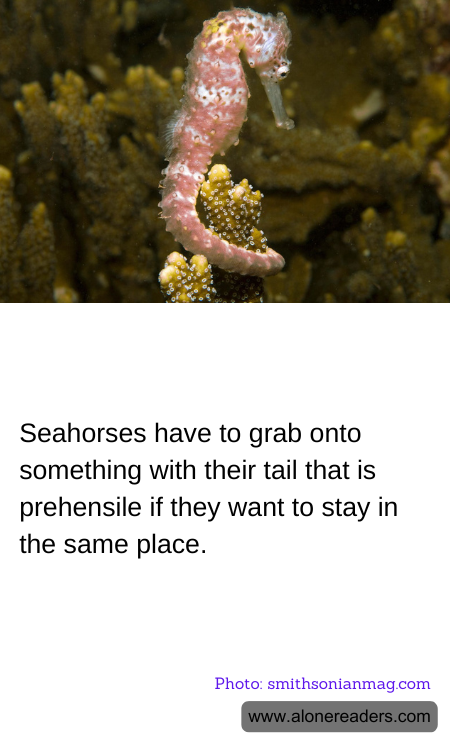
Seahorses are among the most fascinating creatures in the ocean, captivating the imaginations of marine enthusiasts and casual observers alike. One of their most intriguing features is their prehensile tail, which plays a crucial role in their survival. Unlike many other fish that rely on swimming to navigate their environment, seahorses use their tails to anchor themselves to objects in their habitat. This unique adaptation allows them to remain stationary in the often turbulent waters of their underwater world.
The prehensile tail of a seahorse functions much like a monkey's tail, enabling it to grasp and hold onto various surfaces. This ability is essential for seahorses, as they are not strong swimmers. Their bodies are designed for stealth and camouflage rather than speed, making it difficult for them to resist strong currents. By wrapping their tails around seagrass, coral, or other stable structures, seahorses can maintain their position and avoid being swept away. This behavior is particularly important during feeding, as it allows them to remain in areas rich with plankton and other small prey.
In addition to aiding in feeding, the seahorse's tail is vital for reproduction. During courtship, male and female seahorses engage in a unique dance, often intertwining their tails as part of the ritual. Once the female transfers her eggs to the male's brood pouch, the male seahorse will often use his tail to anchor himself securely while he nurtures the developing young. This ensures that he remains in a safe location, protecting the eggs from predators and environmental hazards until they are ready to hatch.
The prehensile tail also serves as a tool for camouflage. Seahorses are masters of disguise, often blending seamlessly with their surroundings to avoid detection by predators. By anchoring themselves to plants or coral, they can mimic the appearance of their environment, making it difficult for predators to spot them. This ability to remain inconspicuous is a critical survival strategy, as seahorses lack the speed and agility to escape quickly from threats.
Seahorses' reliance on their prehensile tails highlights the incredible adaptability of marine life. These creatures have evolved to thrive in their specific niches, using their tails not only for stability but also as a means of interaction and protection. As we continue to explore and understand the complexities of ocean ecosystems, the seahorse remains a symbol of the delicate balance between form and function in nature. Their unique adaptations remind us of the intricate connections that sustain life beneath the waves and the importance of preserving these environments for future generations.