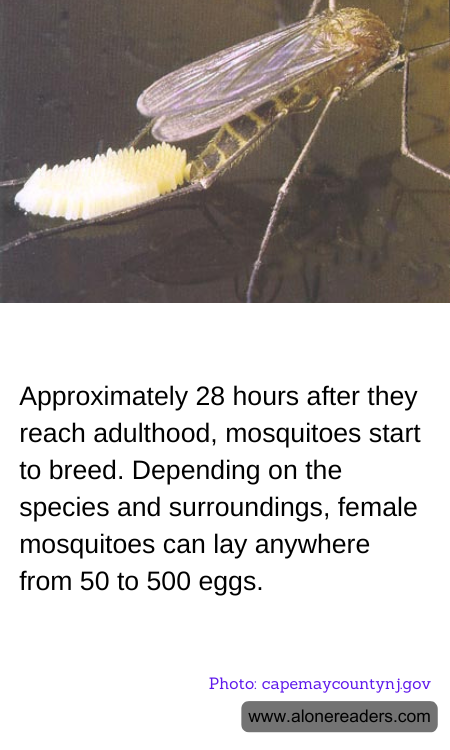
Mosquitoes, often considered one of the most persistent pests, have a fascinating and rapid life cycle that contributes to their widespread presence across the globe. These tiny insects, belonging to the family Culicidae, are known for their ability to reproduce quickly and in large numbers. Remarkably, approximately 28 hours after reaching adulthood, mosquitoes are ready to breed, setting in motion a cycle that ensures their continued proliferation.
The breeding process of mosquitoes is both efficient and prolific. Female mosquitoes, in particular, play a crucial role in the continuation of their species. After mating, a female mosquito seeks out a blood meal, which provides the necessary nutrients for egg development. This quest for blood is what often brings mosquitoes into contact with humans and animals, leading to the familiar itchy bites.
Once the female has fed, she begins the process of laying eggs. The number of eggs a female mosquito can lay varies significantly depending on the species and environmental conditions. Some species are capable of laying as few as 50 eggs, while others can produce up to 500 eggs in a single batch. This variability is influenced by factors such as temperature, humidity, and the availability of suitable breeding sites, such as stagnant water bodies.
The eggs are typically laid on the surface of water or in areas that will soon be flooded. This strategic placement ensures that the eggs have the best chance of survival and development. Within a few days, the eggs hatch into larvae, commonly known as wrigglers, which thrive in aquatic environments. These larvae undergo several stages of growth before transforming into pupae, and eventually emerging as adult mosquitoes, ready to continue the cycle.
The rapid breeding cycle of mosquitoes is a key factor in their ability to adapt and thrive in diverse environments. It also poses significant challenges for controlling mosquito populations, especially in regions where they are vectors for diseases such as malaria, dengue fever, and Zika virus. Understanding the breeding habits of mosquitoes is essential for developing effective strategies to manage their populations and reduce the risk of disease transmission.
Efforts to control mosquitoes often focus on disrupting their breeding cycle. This can include measures such as eliminating standing water where mosquitoes lay their eggs, using larvicides to target the aquatic stages of their life cycle, and employing insecticides to reduce adult populations. Public awareness and community involvement are also crucial in implementing these strategies effectively.
In conclusion, the ability of mosquitoes to breed rapidly and in large numbers is a testament to their evolutionary success. By understanding the intricacies of their life cycle, we can better appreciate the challenges they pose and the importance of ongoing efforts to manage their populations. Through a combination of scientific research, public health initiatives, and community engagement, we can work towards minimizing the impact of these tiny yet formidable insects.
