More About This Card
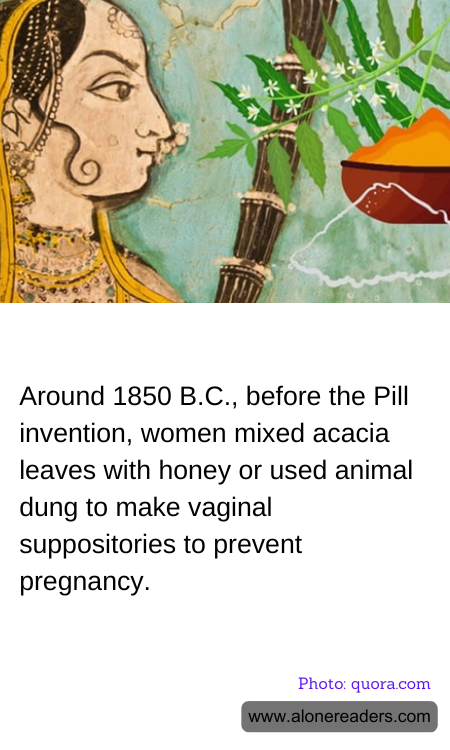
In the annals of human history, the quest for effective birth control has been a constant companion to the evolution of society. Long before the advent of modern contraceptives, ancient civilizations employed a variety of methods to prevent pregnancy, some of which may seem peculiar by today's standards. Around 1850 B.C., women in ancient Egypt and other parts of the world utilized natural resources available to them, crafting rudimentary yet innovative solutions to control fertility.
One of the most intriguing methods involved the use of acacia leaves mixed with honey. Acacia, a plant known for its medicinal properties, was believed to possess spermicidal qualities. Women would blend these leaves with honey to create a paste, which was then used as a vaginal suppository. The sticky consistency of honey likely served as a medium to hold the mixture in place, while the acacia leaves contributed their natural properties to inhibit sperm motility. This method, though primitive, reflects an early understanding of the need for a barrier or chemical agent to prevent conception.
In addition to plant-based concoctions, some ancient practices involved the use of animal dung as a form of contraceptive. While this may sound unorthodox and even unsanitary by modern standards, it is important to consider the context of the time. The use of animal dung, particularly from crocodiles or elephants, was based on the belief that it could create an acidic environment, unfavorable for sperm survival. This method highlights the lengths to which women went to exert control over their reproductive health, even in the absence of scientific knowledge as we understand it today.
These early contraceptive practices underscore the ingenuity and resourcefulness of ancient women. They navigated the complexities of reproduction with the tools and knowledge available to them, laying the groundwork for future advancements in birth control. While these methods may not have been foolproof, they represent a significant chapter in the history of human health and autonomy.
Today, with the availability of a wide range of contraceptive options, it is easy to overlook the struggles and innovations of the past. However, understanding these historical practices offers valuable insights into the enduring human desire to manage fertility and the continuous journey towards safer and more effective reproductive health solutions. As we reflect on these ancient methods, we are reminded of the resilience and creativity that have always been a part of the human experience.