More About This Card
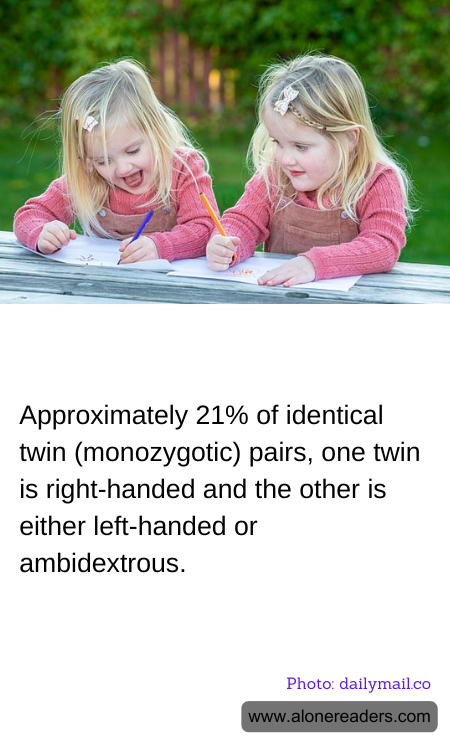
The phenomenon of handedness in identical twins presents a fascinating glimpse into the complexities of genetics and environmental influences. While identical twins, or monozygotic twins, share the same genetic makeup, approximately 21% of these pairs exhibit differences in handedness. In these cases, one twin is right-handed, while the other is either left-handed or ambidextrous. This intriguing statistic challenges the common assumption that identical twins are mirror images of each other in every aspect, including their dominant hand.
Handedness is a trait that has long intrigued scientists and laypeople alike. It is generally believed to be influenced by a combination of genetic, environmental, and developmental factors. The fact that identical twins can differ in handedness suggests that genetics alone cannot account for this trait. Instead, it points to the significant role of environmental influences and possibly random developmental variations that occur in the womb.
The development of handedness begins early in life, with some studies suggesting that hand preference can be observed in fetuses as early as the eighth week of gestation. However, the exact mechanisms that determine whether a person becomes right-handed, left-handed, or ambidextrous remain largely unknown. In the case of identical twins, it is possible that slight differences in the prenatal environment, such as variations in the positioning of the twins in the womb, could contribute to differences in handedness.
Moreover, the brain's lateralization, or the specialization of the brain's hemispheres for different functions, plays a crucial role in determining handedness. While the left hemisphere is typically associated with language and right-handedness, the right hemisphere is linked to spatial abilities and left-handedness. In identical twins, subtle differences in brain development and lateralization could lead to variations in handedness, even though they share the same genetic code.
The study of handedness in identical twins not only sheds light on the complexities of human development but also highlights the intricate interplay between nature and nurture. It serves as a reminder that even with identical genetic material, individuals can exhibit unique traits and characteristics. This diversity is a testament to the dynamic nature of human development and the myriad factors that contribute to making each person unique.
In conclusion, the occurrence of differing handedness in approximately 21% of identical twin pairs underscores the complexity of human traits and the limitations of attributing them solely to genetics. It invites further exploration into the environmental and developmental factors that shape our identities. As researchers continue to delve into the mysteries of handedness, they unravel more about the broader questions of human individuality and the intricate dance between our genetic blueprint and the environments we inhabit.