More About This Card
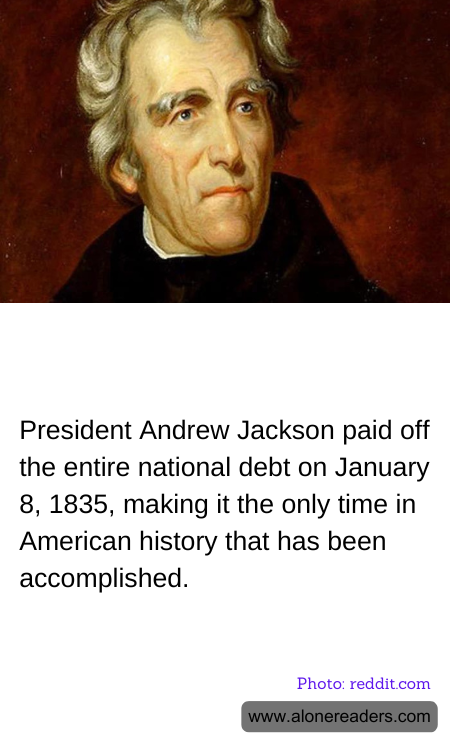
On January 8, 1835, President Andrew Jackson achieved a remarkable feat that remains unparalleled in American history: he paid off the entire national debt. This singular accomplishment marked the only time the United States has been completely free of national debt, a milestone that has intrigued historians and economists alike.
Andrew Jackson, the seventh President of the United States, was a staunch advocate for fiscal responsibility and a fierce opponent of what he perceived as the corrupting influence of debt. His presidency was characterized by a strong commitment to reducing the national debt, which had ballooned during the War of 1812. Jackson believed that a nation free of debt would be stronger and more independent, and he pursued this goal with unwavering determination.
Jackson's strategy to eliminate the national debt involved a combination of prudent fiscal management and aggressive economic policies. He implemented a strict policy of government frugality, cutting unnecessary expenditures and ensuring that government funds were used efficiently. Additionally, Jackson's administration benefited from a period of economic growth and increased revenue from tariffs, which bolstered the federal treasury.
One of the most controversial aspects of Jackson's debt elimination strategy was his opposition to the Second Bank of the United States. Jackson viewed the bank as a symbol of elite power and corruption, and he believed it wielded too much influence over the nation's economy. In a bold move, Jackson vetoed the renewal of the bank's charter and withdrew federal deposits, redistributing them to smaller state banks. This decision was met with significant opposition and sparked a heated political battle, but Jackson remained resolute in his conviction.
The culmination of Jackson's efforts came on January 8, 1835, when the United States Treasury reported a zero balance on the national debt. This achievement was celebrated by Jackson and his supporters as a triumph of fiscal discipline and a testament to the strength of the American economy. However, the debt-free status was short-lived. Economic fluctuations, including the Panic of 1837, soon led to the reaccumulation of national debt, a trend that has continued to the present day.
While Jackson's approach to debt reduction was effective in the short term, it also had long-lasting implications. His dismantling of the national bank and redistribution of federal funds contributed to economic instability and financial crises in the years that followed. Nonetheless, Jackson's achievement of a debt-free nation remains a unique chapter in American history, serving as a reminder of the complexities and challenges of managing a nation's finances.
Today, the idea of a debt-free America seems distant, with the national debt reaching unprecedented levels. However, Jackson's accomplishment continues to inspire discussions about fiscal responsibility and the role of government in managing economic policy. His legacy, though controversial, underscores the enduring importance of balancing economic growth with prudent financial management.