More About This Card
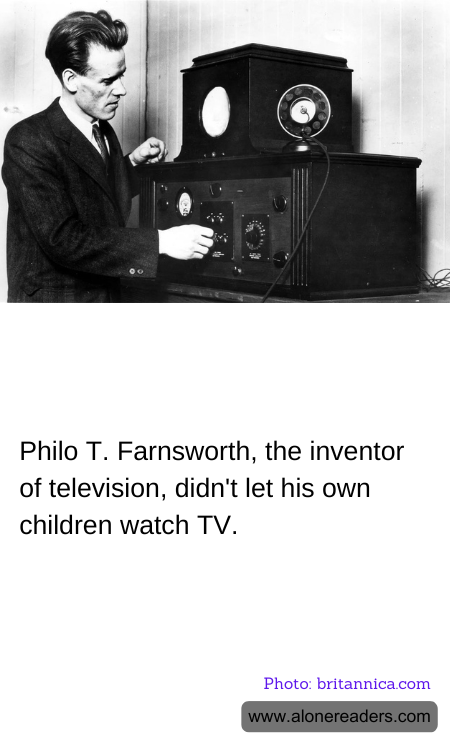
Philo T. Farnsworth, a name that might not be as widely recognized as it deserves to be, was the brilliant mind behind one of the most transformative inventions of the 20th century: the television. Born in 1906 in a small log cabin in Utah, Farnsworth was a prodigy whose fascination with electronics and science began at an early age. By the time he was a teenager, he had already conceptualized the basic principles of electronic television, a feat that would eventually change the way the world consumed information and entertainment.
Despite his monumental contribution to modern media, Farnsworth held a surprisingly cautious view of the very invention he brought to life. In a twist of irony, Farnsworth was known to have restricted his own children from watching television. This decision was not born out of disdain for his creation but rather from a deep concern about the potential negative impacts of television on young minds. Farnsworth feared that excessive television viewing could stifle creativity and imagination, qualities he deeply valued and believed were essential for personal development and innovation.
Farnsworth's apprehensions were not entirely unfounded. As television became a staple in households across the globe, concerns about its influence on children and society at large began to surface. Critics argued that television could lead to passive consumption of content, reduce physical activity, and expose viewers to inappropriate material. Farnsworth, who had envisioned television as a tool for education and enlightenment, was wary of these potential pitfalls and sought to protect his children from them.
His decision to limit his children's exposure to television also reflected his broader philosophy on parenting and education. Farnsworth believed in fostering an environment where curiosity and critical thinking could flourish. He encouraged his children to engage in activities that stimulated their minds and bodies, such as reading, playing outdoors, and exploring their own interests. By doing so, he hoped to instill in them the same sense of wonder and innovation that had driven him to create television in the first place.
Philo T. Farnsworth's story serves as a poignant reminder of the dual-edged nature of technological advancements. While his invention revolutionized communication and entertainment, it also highlighted the importance of mindful consumption and the need to balance technology with other enriching experiences. Farnsworth's legacy is not only that of a pioneering inventor but also of a thoughtful parent who understood the profound impact of his creation and sought to navigate its complexities with care and foresight.