More About This Card
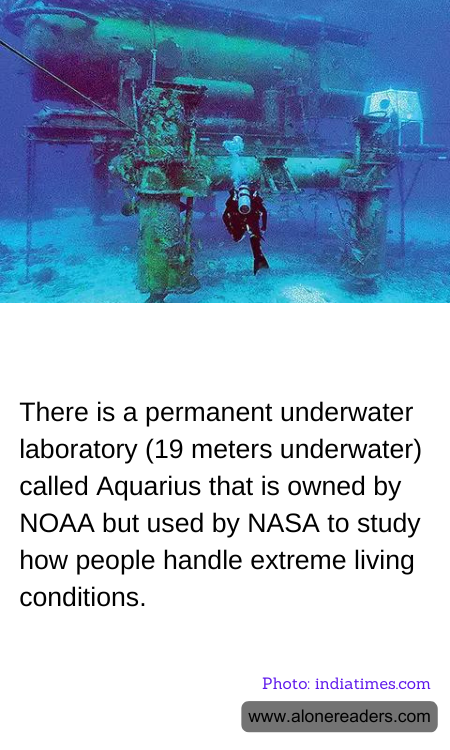
Nestled 19 meters beneath the surface of the Atlantic Ocean, off the coast of Key Largo, Florida, lies a unique and fascinating structure known as Aquarius. This permanent underwater laboratory, owned by the National Oceanic and Atmospheric Administration (NOAA), serves as a vital research facility for scientists and astronauts alike. While its primary purpose is to study marine ecosystems, Aquarius has gained significant attention for its role in helping NASA understand how humans cope with extreme living conditions.
Aquarius is the only undersea laboratory of its kind in the world, providing a rare opportunity for researchers to live and work underwater for extended periods. The facility is equipped with living quarters, a laboratory, and a wet porch, allowing aquanauts to dive directly into the ocean. This immersive environment offers invaluable insights into the physiological and psychological challenges faced by individuals in isolated and confined spaces, similar to those encountered during space missions.
NASA has utilized Aquarius for its NEEMO (NASA Extreme Environment Mission Operations) missions, where astronauts and scientists simulate space missions to test equipment, conduct experiments, and develop strategies for future space exploration. The underwater habitat mimics the isolation, pressure, and limited resources that astronauts experience in space, making it an ideal training ground. These missions help NASA prepare for long-duration spaceflights, such as missions to Mars, by studying how crew members adapt to living and working in such demanding conditions.
Living in Aquarius requires careful planning and adaptation. The aquanauts must manage limited resources, maintain their equipment, and work as a cohesive team to complete their objectives. The experience teaches them valuable lessons in problem-solving, communication, and teamwork, which are crucial for the success of space missions. Additionally, the underwater environment allows researchers to study the effects of prolonged exposure to increased pressure and reduced gravity on the human body, providing insights into potential health risks for astronauts.
Beyond its contributions to space exploration, Aquarius plays a crucial role in marine research. Scientists use the laboratory to study coral reefs, monitor ocean health, and develop conservation strategies. The ability to conduct long-term studies in a natural setting provides a deeper understanding of marine ecosystems and the impact of human activities on the ocean.
Aquarius stands as a testament to human ingenuity and the spirit of exploration. By bridging the gap between ocean and space research, it offers a unique platform for advancing our knowledge of both realms. As we continue to push the boundaries of exploration, facilities like Aquarius will remain essential in preparing us for the challenges of living and working in extreme environments, whether beneath the waves or among the stars.