More About This Card
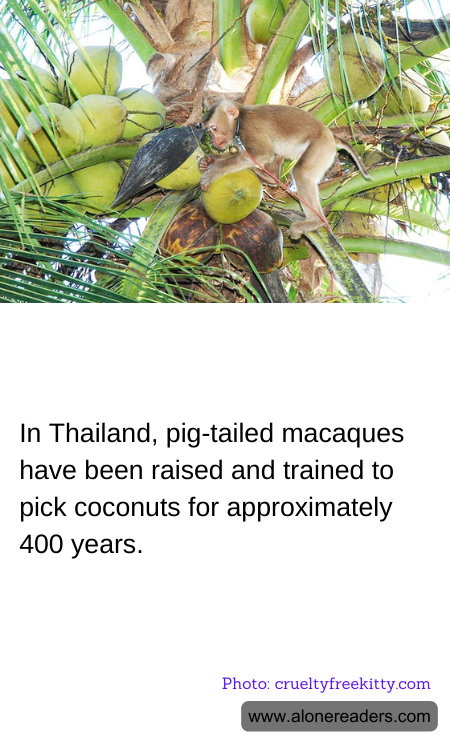
In the lush landscapes of Thailand, a unique and age-old tradition continues to thrive, captivating both locals and visitors alike. For approximately 400 years, pig-tailed macaques have been raised and trained to pick coconuts, a practice that intertwines the natural agility of these primates with the agricultural needs of the region. This fascinating collaboration between humans and animals highlights a cultural heritage that is both practical and deeply rooted in the history of Thailand.
The pig-tailed macaque, known for its intelligence and dexterity, is an ideal candidate for this task. These monkeys are trained from a young age to climb tall coconut trees and skillfully twist the coconuts until they fall to the ground. This method is not only efficient but also safer for humans, who would otherwise have to climb the trees themselves, risking falls and injuries. The training of these macaques is a meticulous process, often passed down through generations of trainers who understand the nuances of working with these intelligent creatures.
In rural communities, the use of macaques for coconut harvesting is more than just a practical solution; it is a cultural tradition that fosters a unique bond between humans and animals. The trainers develop a deep understanding and respect for their macaques, treating them as both workers and companions. This relationship is built on trust and mutual benefit, as the monkeys are provided with food, shelter, and care in exchange for their labor.
However, this practice has not been without controversy. In recent years, concerns have been raised about the welfare of the macaques, with some animal rights organizations arguing that the training and use of these animals for labor can be exploitative. In response, many trainers and local communities have emphasized the importance of ethical treatment and have taken steps to ensure that the macaques are well cared for and not overworked. This includes providing ample rest, proper nutrition, and medical care, as well as ensuring that the training methods are humane and respectful of the animals' natural behaviors.
Despite the debates, the tradition of using pig-tailed macaques for coconut harvesting remains an integral part of Thailand's agricultural landscape. It serves as a reminder of the intricate ways in which humans and animals can coexist and collaborate, blending tradition with modernity. As Thailand continues to navigate the challenges of balancing cultural heritage with contemporary ethical standards, the story of the pig-tailed macaques offers a glimpse into a world where nature and human ingenuity come together in harmony.
For visitors to Thailand, witnessing this practice can be an enlightening experience, offering insight into the country's rich cultural tapestry and the enduring legacy of its agricultural traditions. Whether viewed as a cultural curiosity or a topic of ethical discussion, the use of pig-tailed macaques in coconut harvesting remains a testament to the enduring relationship between humans and the natural world.