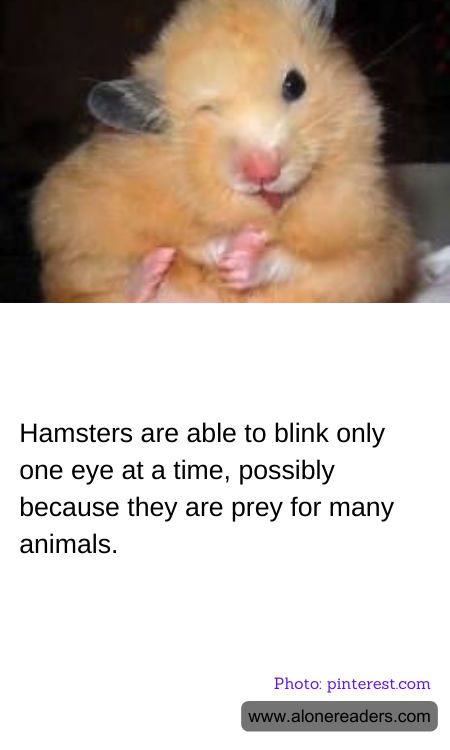
Hamsters, those small, furry creatures often found scurrying around in cages, have a unique and fascinating trait: they can blink one eye at a time. This peculiar ability is not just a quirky characteristic but is believed to be an evolutionary adaptation linked to their survival as prey animals.
In the wild, hamsters are constantly on the lookout for predators. Their small size makes them an easy target for a variety of animals, including birds of prey, snakes, and larger mammals. To survive, hamsters have developed several defense mechanisms, one of which is their ability to blink one eye at a time. This trait allows them to keep one eye open and alert to their surroundings while the other eye rests. By doing so, they can maintain a constant vigil for potential threats, even when they are in a relaxed state.
The ability to blink one eye at a time is not unique to hamsters; it is also observed in other prey animals. This adaptation is crucial for survival in the wild, where being aware of one's environment can mean the difference between life and death. For hamsters, this means being able to detect the slightest movement or sound that could indicate the presence of a predator. By keeping one eye open, they can quickly react to danger, whether it means freezing in place to avoid detection or making a swift escape to safety.
In addition to their unique blinking ability, hamsters have other adaptations that help them evade predators. They have excellent hearing and a keen sense of smell, which further aids in detecting danger. Their small, agile bodies allow them to quickly dart into burrows or hide in dense vegetation. These combined traits make hamsters remarkably adept at avoiding predators, despite their vulnerability due to their size.
For those who keep hamsters as pets, understanding these natural behaviors can enhance the care and environment provided for these animals. While pet hamsters are safe from predators, they still exhibit many of the same instincts as their wild counterparts. Providing them with a habitat that allows for exploration and hiding can help satisfy their natural behaviors and contribute to their overall well-being.
In conclusion, the ability of hamsters to blink one eye at a time is a fascinating example of how animals adapt to their environments to increase their chances of survival. This trait, along with their other sensory and physical adaptations, highlights the remarkable ways in which nature equips even the smallest creatures with the tools they need to thrive. Whether in the wild or as beloved pets, hamsters continue to captivate us with their unique behaviors and charming personalities.
