More About This Card
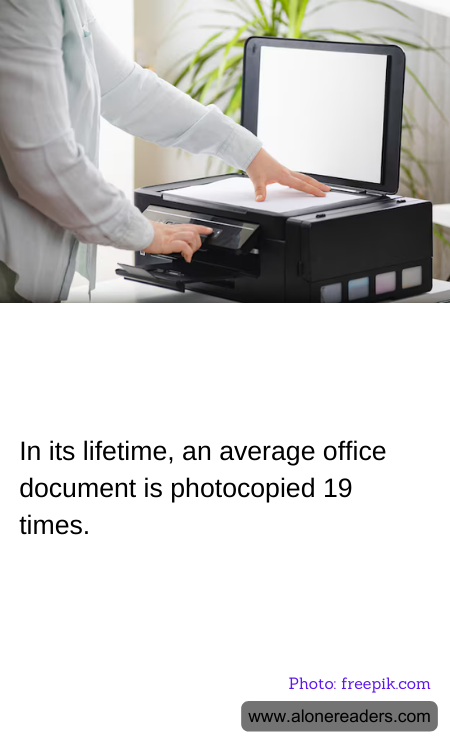
In the digital age, where emails and cloud storage dominate the landscape of information sharing, the humble office document still holds its ground. Despite the proliferation of digital alternatives, the average office document is photocopied an astounding 19 times throughout its lifecycle. This statistic may seem surprising, but it underscores the enduring importance of physical documents in the workplace.
Photocopying remains a staple in offices for several reasons. First and foremost, physical copies provide a tangible form of information that many people find easier to read and annotate. Whether it's highlighting important sections or jotting down notes in the margins, the tactile experience of handling paper can enhance comprehension and retention. Additionally, in meetings or collaborative settings, having a physical document can facilitate discussion and ensure that everyone is literally on the same page.
Moreover, photocopying serves as a reliable backup in case of digital failures. While cloud storage and digital files are convenient, they are not immune to technical glitches, cyber threats, or accidental deletions. A photocopied document can serve as a safeguard, ensuring that critical information is preserved and accessible when needed. This is particularly important in industries where compliance and record-keeping are paramount, such as legal, healthcare, and finance.
The environmental impact of photocopying, however, cannot be overlooked. With each document being copied multiple times, the consumption of paper and energy can add up significantly. This has prompted many organizations to adopt more sustainable practices, such as using recycled paper, implementing double-sided printing, and encouraging digital alternatives whenever possible. The push towards a paperless office is gaining momentum, but the transition is gradual and varies across different sectors.
Despite the environmental concerns, the act of photocopying remains deeply ingrained in office culture. It is a testament to the enduring need for physical documentation in a world that is increasingly digital. As technology continues to evolve, the role of photocopying may change, but its current prevalence highlights the balance that many workplaces strive to achieve between digital efficiency and the reliability of paper.
In conclusion, the fact that an average office document is photocopied 19 times during its lifetime is a reflection of both the practical needs and the challenges faced by modern workplaces. While digital solutions offer convenience and efficiency, the tangible nature of paper documents continues to hold significant value. As businesses navigate the complexities of the digital age, finding a harmonious blend of paper and digital solutions will be key to maintaining productivity and sustainability.