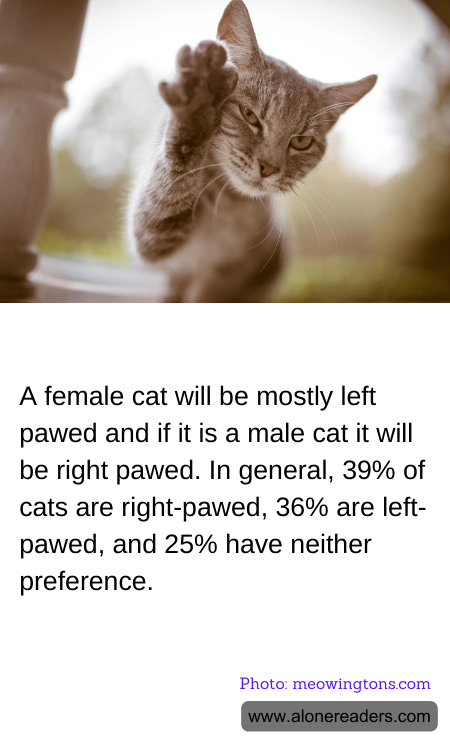
Cats have long been a source of fascination for humans, not only for their mysterious and independent nature but also for their quirky behaviors. One such intriguing aspect of feline behavior is paw preference, akin to human handedness. Recent studies have shed light on the fact that cats, like humans, can show a preference for using one paw over the other. Interestingly, this preference appears to be influenced by the cat's gender.
Research indicates that female cats are more likely to be left-pawed, while male cats tend to be right-pawed. This finding adds a new layer to our understanding of these enigmatic creatures. The reasons behind this gender-based difference in paw preference are not entirely clear, but it is believed to be linked to the brain's hemispheric dominance, which varies between male and female cats. Just as in humans, where the left hemisphere of the brain controls the right side of the body and vice versa, similar neurological pathways may influence paw preference in cats.
In general, studies have shown that 39% of cats are right-pawed, 36% are left-pawed, and 25% exhibit no particular preference, using both paws equally. This distribution suggests that while there is a tendency towards a dominant paw, a significant number of cats are ambidextrous. Observing a cat's paw preference can be a fun and engaging activity for pet owners. Simple tests, such as noting which paw a cat uses to reach for a toy or food, can reveal their dominant side.
Understanding paw preference in cats is not just an amusing curiosity; it can also have practical implications. For instance, knowing a cat's dominant paw can help in designing more effective enrichment activities and toys that cater to their natural inclinations. Additionally, it can aid veterinarians and pet owners in identifying potential neurological issues if a cat suddenly changes its paw preference.
Moreover, this insight into feline behavior underscores the complexity and individuality of cats. Each cat, with its unique personality and preferences, enriches the lives of those who care for them. By paying attention to such details, cat owners can deepen their bond with their pets and provide an environment that supports their natural behaviors.
In conclusion, the study of paw preference in cats offers a fascinating glimpse into the intricate workings of their minds. Whether your feline friend is left-pawed, right-pawed, or ambidextrous, understanding these preferences can enhance the way we interact with and care for them. As we continue to explore the mysteries of our feline companions, each discovery brings us closer to appreciating the remarkable creatures that share our homes and hearts.
