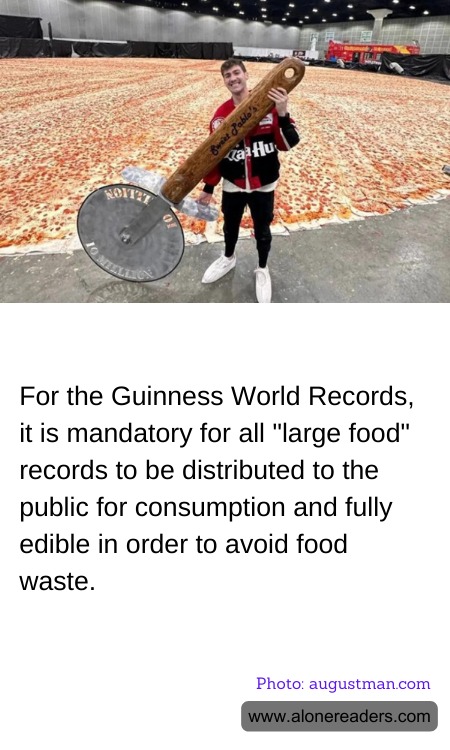
In a world where food waste is a growing concern, the Guinness World Records has taken a commendable step by mandating that all "large food" records must be distributed to the public for consumption and be fully edible. This initiative not only highlights the importance of sustainability but also ensures that the joy of setting a world record does not come at the expense of wasting precious resources.
The spectacle of creating the world's largest pizza, cake, or sandwich has always captured the imagination of people worldwide. These events are often celebrated with much fanfare, drawing crowds eager to witness history in the making. However, the aftermath of such events has historically raised questions about the fate of the colossal creations. By requiring that these foods be distributed and consumed, Guinness World Records is setting a precedent that aligns with global efforts to reduce food waste and promote responsible consumption.
This policy is a reflection of a broader societal shift towards sustainability and environmental consciousness. According to the Food and Agriculture Organization of the United Nations, approximately one-third of all food produced globally is wasted each year. This staggering statistic underscores the importance of initiatives like those of Guinness World Records, which encourage organizers to plan their record attempts with a focus on minimizing waste. By ensuring that the food is edible and distributed, these events can transform from mere spectacles into opportunities for community engagement and social good.
Moreover, the requirement for edibility and distribution adds an additional layer of challenge and creativity for participants. It is not enough to simply create a massive food item; it must also be of a quality that can be enjoyed by the public. This encourages chefs and organizers to innovate, finding ways to scale up recipes without compromising on taste or safety. The result is often a collaborative effort that brings together culinary experts, volunteers, and local communities, fostering a sense of unity and shared purpose.
The distribution of these large food items often involves partnerships with local charities and food banks, ensuring that the food reaches those who need it most. This aspect of the record attempts not only amplifies the positive impact but also raises awareness about food insecurity issues. It transforms what could be a frivolous pursuit into a meaningful contribution to society, demonstrating that even in the pursuit of records, there is room for compassion and responsibility.
In conclusion, the Guinness World Records' mandate for large food records to be fully edible and distributed is a significant step towards promoting sustainability and reducing food waste. It serves as a reminder that even in the pursuit of extraordinary achievements, we must remain mindful of our impact on the world. By turning these record attempts into opportunities for community involvement and social good, Guinness World Records is setting an example for others to follow, proving that with a little creativity and responsibility, we can all contribute to a more sustainable future.
