More About This Card
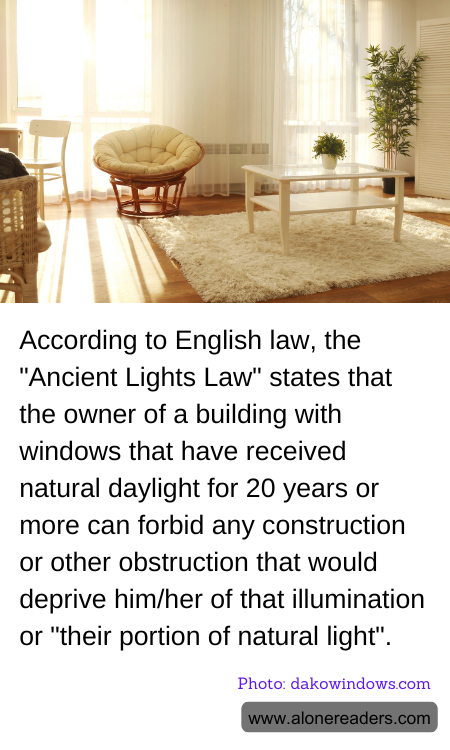
The concept of "Ancient Lights" is a fascinating aspect of English property law that underscores the importance of natural light in urban and rural settings. Rooted in the Prescription Act of 1832, the Ancient Lights Law provides a unique legal framework that protects the right to light for property owners. According to this law, if a building has windows that have received natural daylight for 20 years or more, the owner can prevent any construction or obstruction that would block this light. This right is not just a quaint relic of the past but a significant legal principle that continues to influence property development and urban planning in England today.
The Ancient Lights Law serves as a reminder of the value placed on natural light, a resource that is often taken for granted in modern times. In densely populated areas, where buildings are frequently erected in close proximity to one another, the right to light can become a contentious issue. Property owners who have enjoyed uninterrupted daylight for two decades or more can invoke this law to ensure that their access to natural light is not compromised by new developments. This legal protection is particularly relevant in urban environments, where the construction of high-rise buildings can easily overshadow existing structures, depriving them of sunlight.
While the Ancient Lights Law may seem straightforward, its application can be complex. Determining whether a window qualifies for protection under this law involves careful consideration of several factors, including the history of the building and the nature of the light received. Legal disputes often arise when new construction threatens to infringe upon established rights to light, leading to negotiations or court cases to resolve the matter. In some instances, developers may be required to modify their plans or provide compensation to affected property owners to maintain compliance with the law.
The Ancient Lights Law also highlights the broader implications of urban development and the need for thoughtful planning that balances growth with the preservation of existing community resources. As cities continue to expand, the challenge of accommodating new construction while respecting the rights of existing property owners becomes increasingly significant. The law serves as a safeguard, ensuring that the pursuit of progress does not come at the expense of individual rights and well-being.
In conclusion, the Ancient Lights Law is a testament to the enduring importance of natural light in our lives and the legal mechanisms in place to protect it. By acknowledging the rights of property owners to their portion of natural light, this law fosters a more harmonious coexistence between old and new structures, promoting a balanced approach to development that respects both tradition and innovation. As urban landscapes evolve, the principles enshrined in the Ancient Lights Law will continue to play a crucial role in shaping the future of our built environment.